Making organisational reality visible.
HRDA reveals the lived dynamics behind formal structures — so leaders can understand what is really shaping trust, cooperation, risk and performance.
Organisations are rarely blocked by what is written in charts, policies or strategy documents. They are shaped by what people actually experience: informal power, silence, withdrawal, friction, trust erosion and unspoken rules.
HRDA — Human Reality Dynamics Assessment — makes these dynamics visible, discussable and actionable.
Formal structures explain how an organisation is meant to work. HRDA looks at how it is actually lived.
Most organisations have defined roles, processes, governance models and cultural statements. Yet many of the dynamics that determine whether people speak up, collaborate, trust leadership or disengage remain informal and often invisible.
Hidden dynamics
Patterns of influence, avoidance, loyalty, pressure and informal power often shape outcomes more strongly than formal reporting lines.
Lived reality
What people experience every day may differ significantly from what the organisation officially describes about itself.
Human risk
When tensions remain invisible, they can become operational, cultural, leadership or security risks.
HRDA reveals the patterns beneath the surface.
HRDA does not treat organisations as static structures. It examines the relationships, tensions, perceptions and informal behaviours that shape how work is actually done.
The goal is not to collect more data for its own sake. The goal is to make organisational reality understandable enough to support better judgement.
- where trust is weakening
- where people withdraw instead of speaking up
- where formal roles differ from real influence
- where friction is repeatedly tolerated
- where leadership messages are not landing
- where governance exists formally but not behaviourally
- where organisational risk is emerging early
- where hidden dynamics block effective action
See the pattern. Face the reality. Move with intent.
HRDA is built around three communicative roles. Each represents a different step in making organisational reality visible and useful.
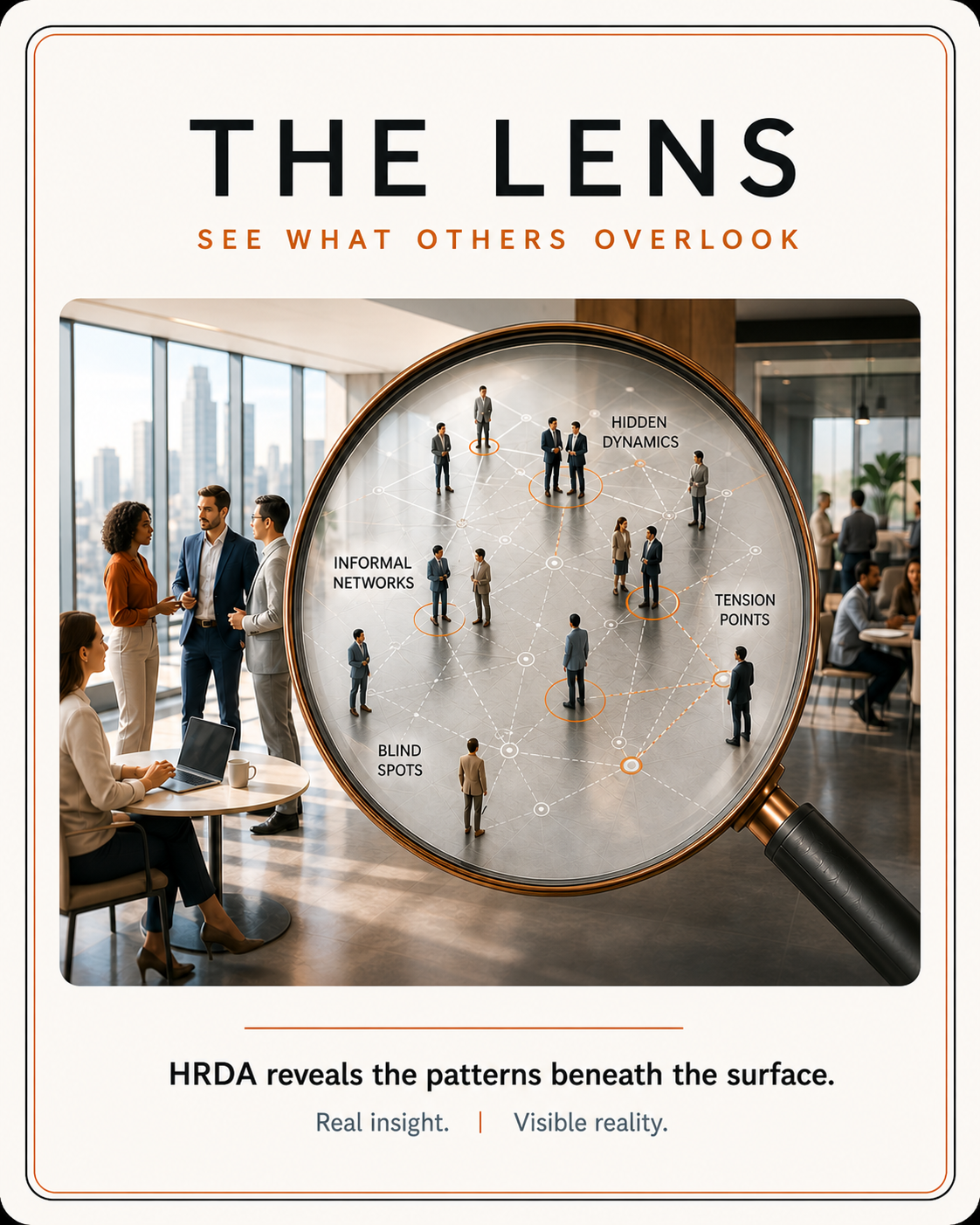
The Lens
The Lens represents diagnosis and visibility. It reveals hidden dynamics, informal networks, blind spots and recurring tension points that are often felt but not clearly named.
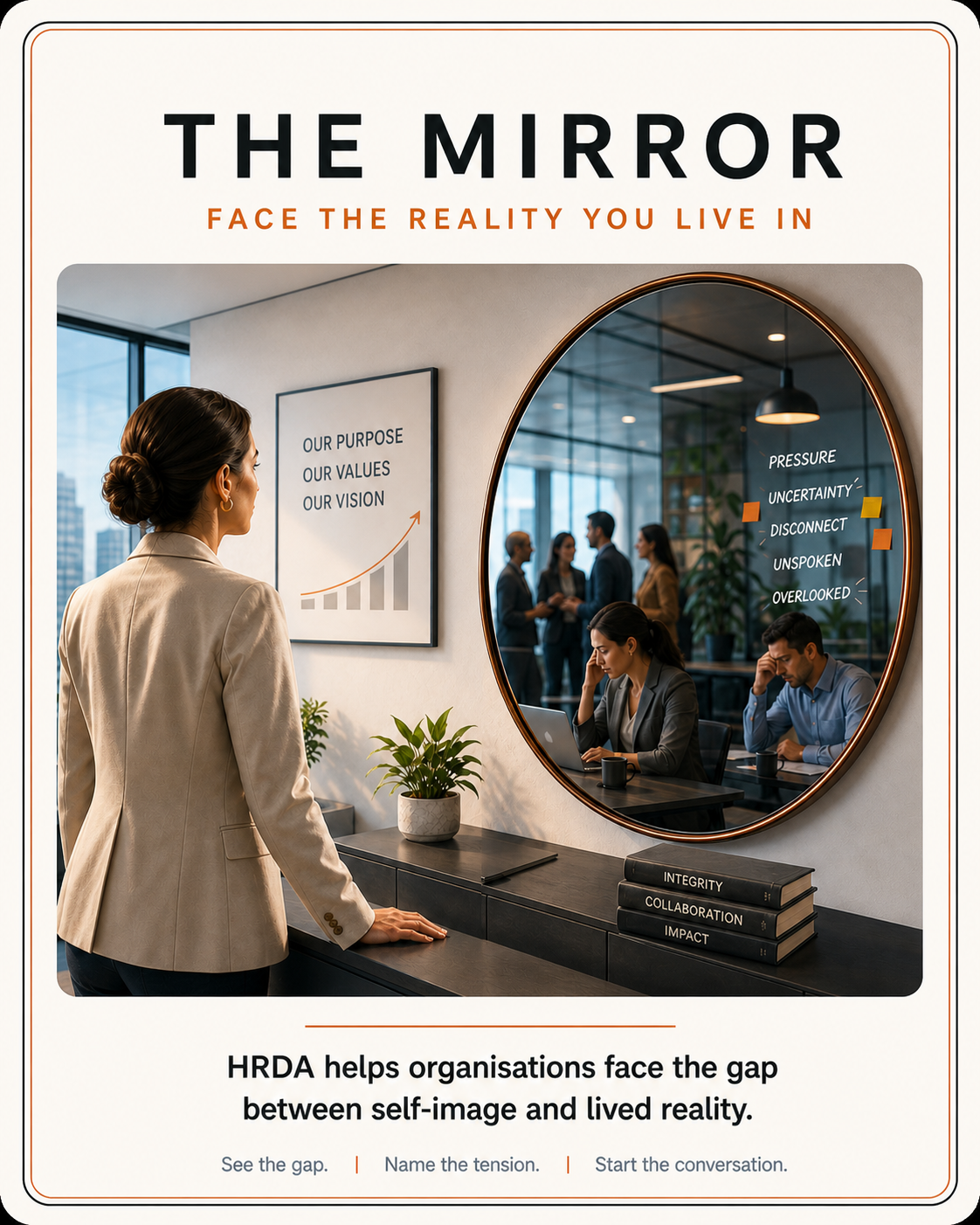
The Mirror
The Mirror reflects the gap between official self-image and lived reality. It helps organisations see where stated values, structures or intentions differ from what people actually experience.
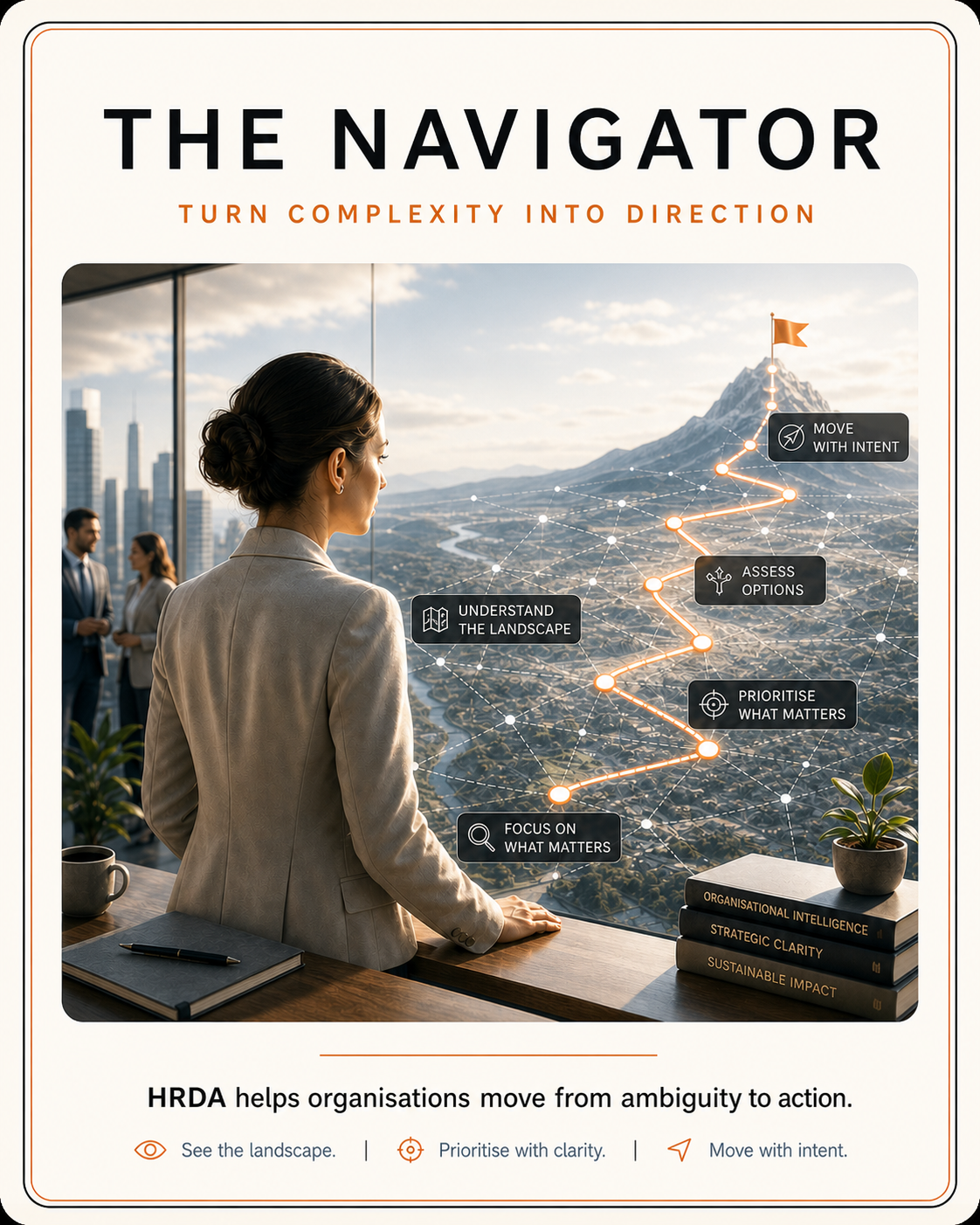
The Navigator
The Navigator turns insight into orientation. It supports prioritisation, decision-making and practical next steps in complex organisational environments.
The HRDA Reality Scan turns hidden dynamics into structured insight.
The Reality Scan is a focused entry format for organisations that want to better understand the human and organisational dynamics behind friction, silence, disengagement, leadership disconnects or emerging risk.
It is designed to be exploratory, discreet and practical.
For selected partners, experts, builders and investors, Project HRDA opens a broader conversation about developing Organisational Reality Intelligence for the AI era.
For organisations where the formal picture no longer explains the lived reality.
HRDA is relevant when leadership, HR, risk, compliance or security functions sense that something important is happening beneath the surface — but the existing reporting, metrics or governance structures do not fully explain it.
Organisational risk is becoming more human, more informal and harder to see.
Hybrid work, accelerated change, AI adoption, regulatory pressure and organisational fatigue have made the human layer of organisations more important — and more difficult to read.
Many problems do not begin as visible failures. They begin as tolerated friction, quiet disengagement, unclear accountability, informal workarounds or conversations that no one wants to have.
HRDA helps organisations see these signals earlier — and act with greater clarity.
Insights on lived organisational reality.
HRDA Insights explores the hidden dynamics that shape organisations: withdrawal, silence, informal power, leadership signals, trust erosion, governance gaps and human risk.
Withdrawal is not absence. It is information.
Governance explains the structure. Reality explains the behaviour.
When people stop speaking, the organisation becomes less informed.
Built from experience in complex, high-stakes organisational environments.
HRDA was developed from practical experience in environments where governance, security, leadership, trust and informal dynamics directly affect organisational outcomes.
It combines organisational interpretation, human risk awareness and structured analysis to make lived reality visible without reducing people to metrics.
What is your organisation tolerating silently?
If formal structures no longer explain what is happening, HRDA can help make the underlying reality visible.