From hidden dynamics to visible organisational intelligence.
HRDA works in three connected movements: it reveals what is hidden, reflects what is actually lived, and turns insight into direction.
The method is not designed to produce generic culture statements or abstract dashboards. It helps organisations interpret the human and systemic dynamics that shape trust, friction, cooperation, risk and action.
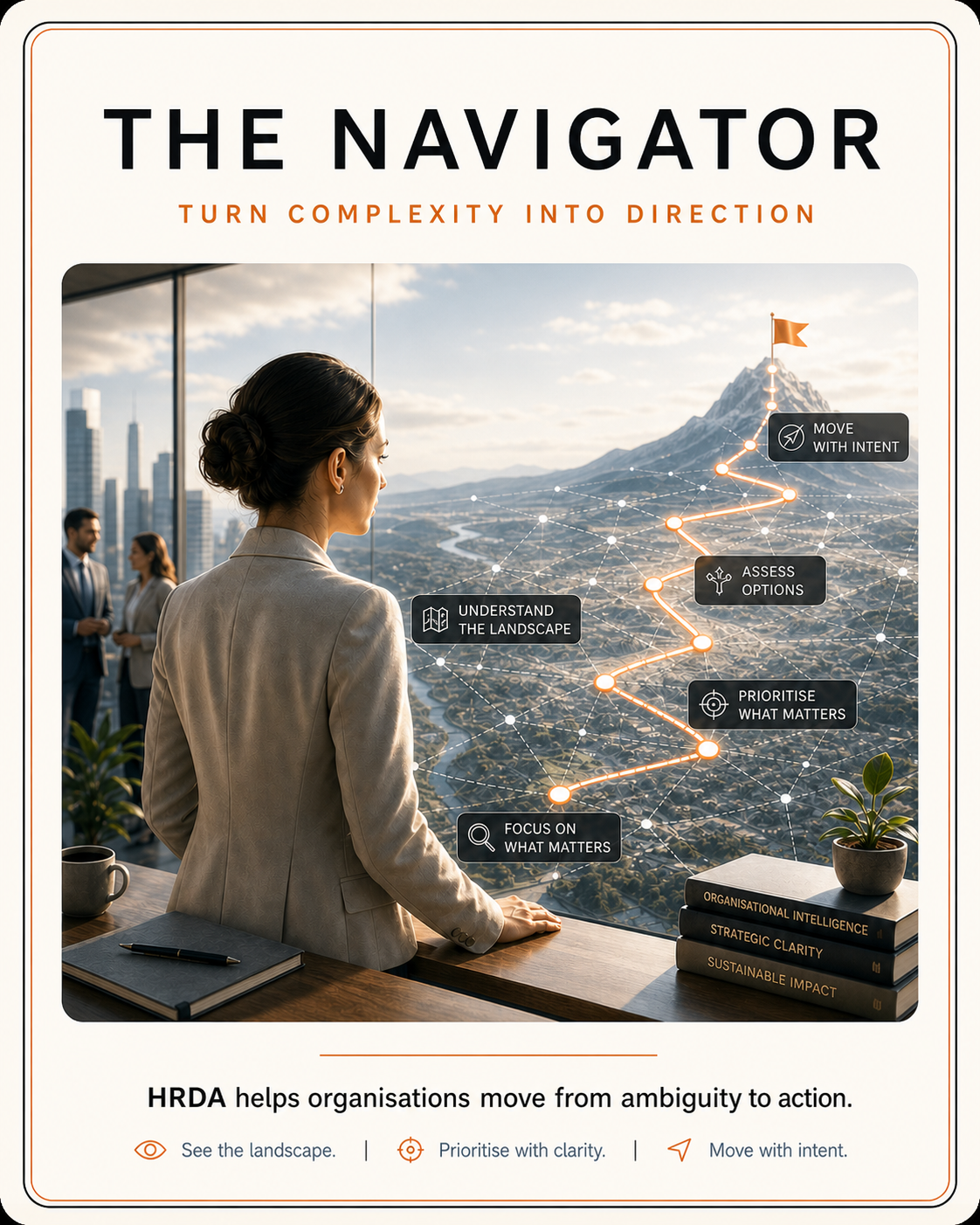
HRDA follows a simple logic: see the pattern, face the reality, move with intent.
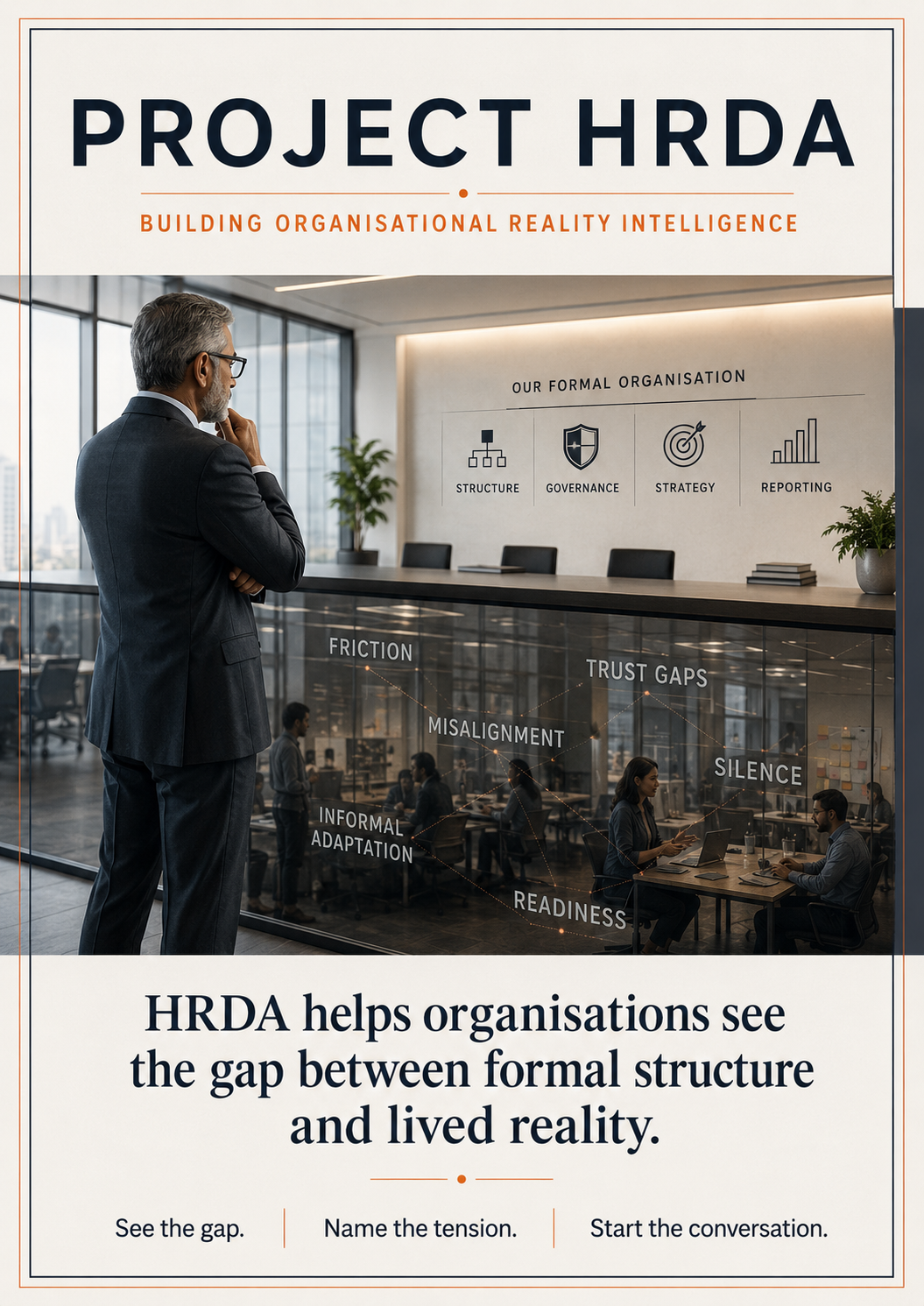
Organisational reality is rarely visible in one place. It appears through recurring behaviours, informal signals, avoidance patterns, leadership gaps, trust dynamics, friction points and the difference between what is formally described and what is actually experienced.
HRDA structures this complexity through three communicative roles: The Lens, The Mirror and The Navigator.
The Lens
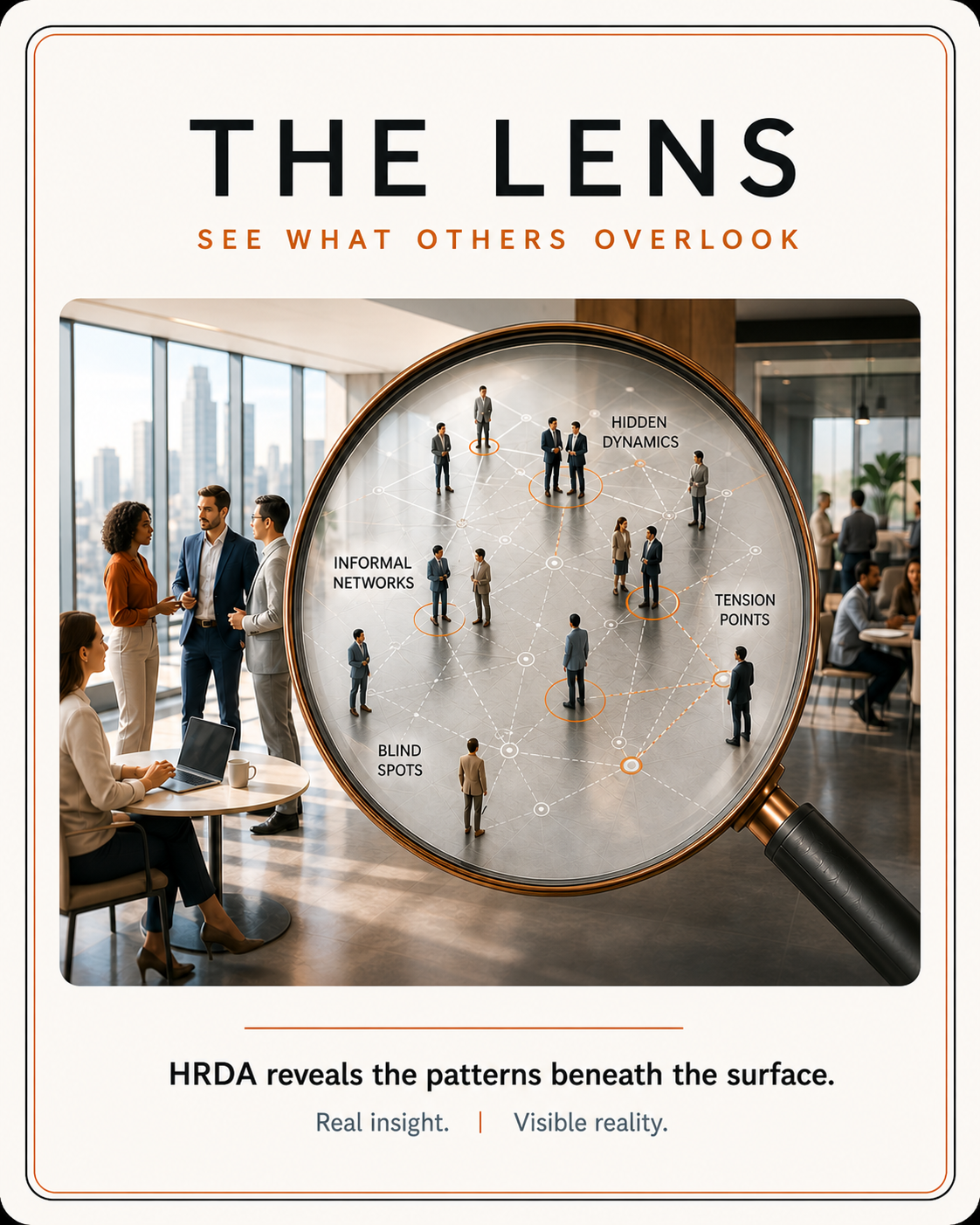
Reveals hidden dynamics, blind spots, informal networks and recurring tension points beneath the formal surface.
The Mirror
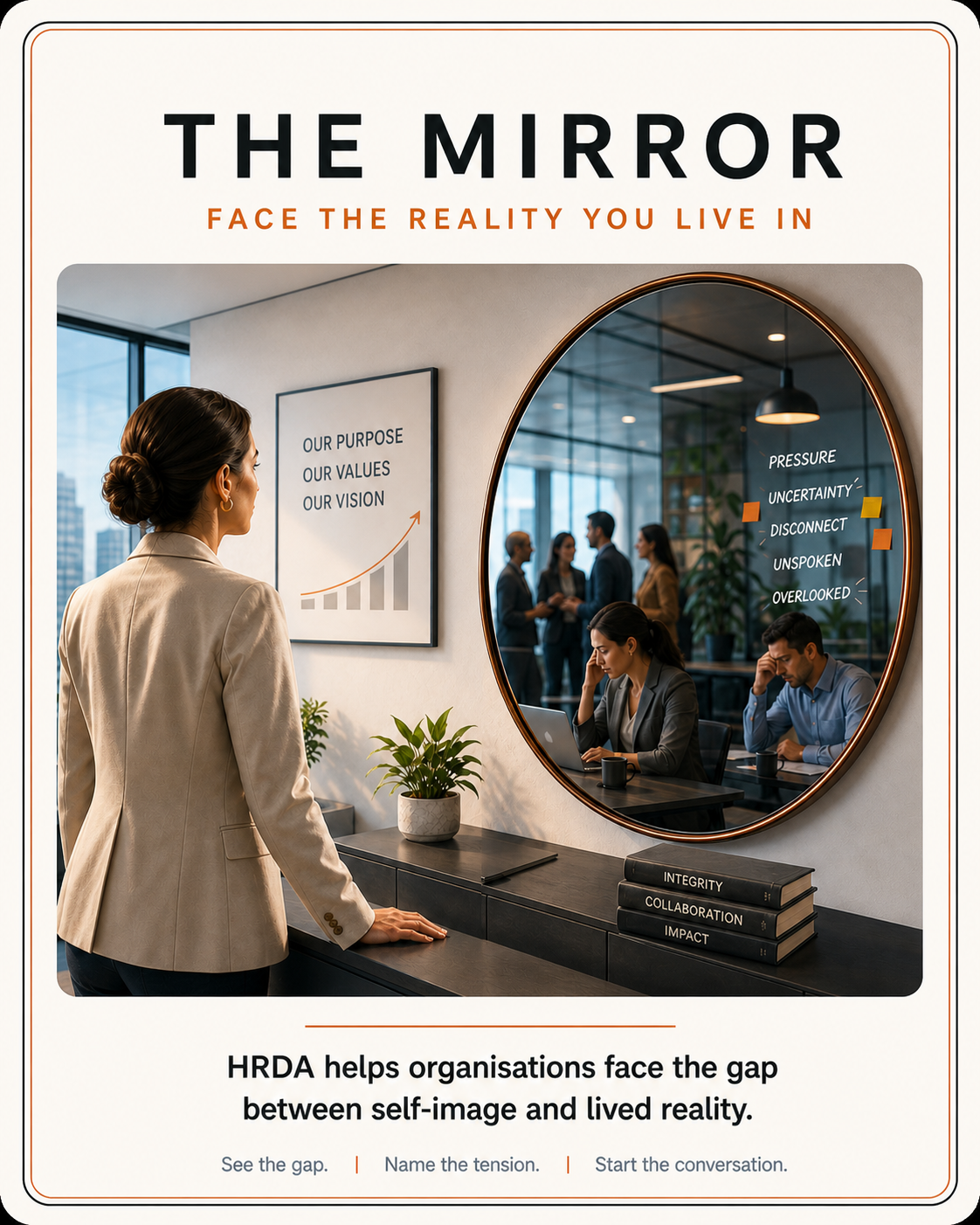
Reflects the gap between official self-image and lived organisational reality.
The Navigator
Turns insight into prioritisation, direction and practical organisational action.
Reveal what others overlook.
The first movement of HRDA is diagnostic. It looks beneath the visible organisation to identify dynamics that are often felt but not clearly named.
This includes informal influence, recurring friction, trust erosion, silence, withdrawal, avoidance, unclear accountability and hidden tension points.
The Lens does not search for individual fault. It reveals patterns in the organisational system.
- hidden dynamics
- informal networks
- blind spots
- tension points
- trust signals
- patterns of avoidance
Reflect the lived reality behind the official story.
The second movement is reflective. HRDA helps organisations compare formal intention with lived experience.
This is where stated values, leadership narratives, governance structures and official processes are examined against what people actually experience in daily organisational life.
The Mirror is not about blame. It makes reality discussable.
- official self-image
- lived experience
- reality gaps
- unspoken tensions
- leadership disconnects
- cultural contradictions
Turn insight into direction.
The third movement is orienting. HRDA does not stop at reflection. It helps translate visible dynamics into judgement, prioritisation and next steps.
The Navigator supports leaders in understanding what matters most, where action is needed, and how to move without oversimplifying complex human realities.
This is where HRDA becomes practical organisational intelligence.
- prioritisation
- risk orientation
- leadership judgement
- next steps
- responsible action
- clearer conversations
HRDA combines interpretation, structure and organisational context.
HRDA is built for situations where simple metrics are not enough. It uses structured interpretation to connect signals across behaviour, perception, leadership, governance and risk.
Signals
HRDA looks at weak signals, repeated patterns, friction points, silence, informal workarounds and signs of trust or withdrawal.
Context
Signals are interpreted in relation to organisational structure, leadership expectations, governance, incentives and constraints.
Meaning
The aim is to understand what these dynamics mean for cooperation, risk, performance, culture and organisational resilience.
Not just observations — structured organisational insight.
Depending on the depth of engagement, HRDA can support a focused reality scan, executive reflection, risk-oriented diagnosis or a deeper assessment of organisational dynamics.
The outcome is not a generic culture report. It is a structured interpretation of lived organisational reality and its implications.
Visible dynamics
What patterns are shaping behaviour beneath the surface?
Reality gaps
Where does the official story differ from lived experience?
Actionable orientation
What should be discussed, prioritised or explored next?
Project HRDA develops the method into Organisational Reality Intelligence.
The HRDA method provides the interpretive logic. The Reality Scan is the first practical entry point. Project HRDA opens the broader development path: selected pilot partners, domain experts, AI builders, investors and strategic partners can help test, challenge and shape the emerging capability.
This keeps HRDA grounded in real organisational situations while developing a scalable approach for leadership-ready situation pictures.
For pilot partners
Apply HRDA to a defined organisational situation and test whether a situation picture creates decision value.
For domain experts
Challenge the model with practical experience from HR, transformation, governance, risk, security and organisational development.
For builders and investors
Explore how HRDA can evolve into a human-in-the-loop workbench for organisational intelligence in the AI era.
HRDA is useful when formal explanations no longer explain what is happening.
HRDA can be applied where leaders sense that something important is shaping the organisation beneath the visible surface.
Leadership disconnects
When messages are formally clear but do not land behaviourally.
Change resistance
When transformation is blocked by informal patterns, unclear incentives or silent resistance.
Trust erosion
When people comply outwardly but withdraw internally.
Governance gaps
When policies exist but lived behaviour follows different rules.
Human risk
When organisational dynamics create risk before formal incidents occur.
Cultural friction
When repeated tensions are tolerated because they are difficult to name.
Start with a focused Reality Scan.
The Reality Scan is a practical entry point for applying HRDA to a concrete organisational context. Project HRDA is the broader development path for selected partners, experts, builders and investors.