Built to see the organisation behind the organisation chart.
HRDA — Human Reality Dynamics Assessment — was developed from practical experience in complex, high-stakes organisational environments where formal structures rarely tell the whole story.
It brings together organisational interpretation, human risk awareness, governance experience and structured sensemaking to make lived organisational reality visible.

Many organisational problems are visible long before they are formally recognised.
They appear as silence, friction, hesitation, informal workarounds, trust erosion, leadership disconnects or repeated patterns that everyone senses but few can clearly name.
HRDA was created to give these patterns a language — and to help leaders understand the lived reality shaping behaviour, cooperation, governance and risk.
Beyond the formal layer
Organisations are not only charts, policies and structures. They are also relationships, interpretations, habits, pressures and unspoken rules.
Before the failure
Weak signals often appear before incidents, disengagement, failed change or governance breakdowns become visible.
For better judgement
HRDA helps leaders make sense of complexity without reducing human reality to simplistic metrics or slogans.
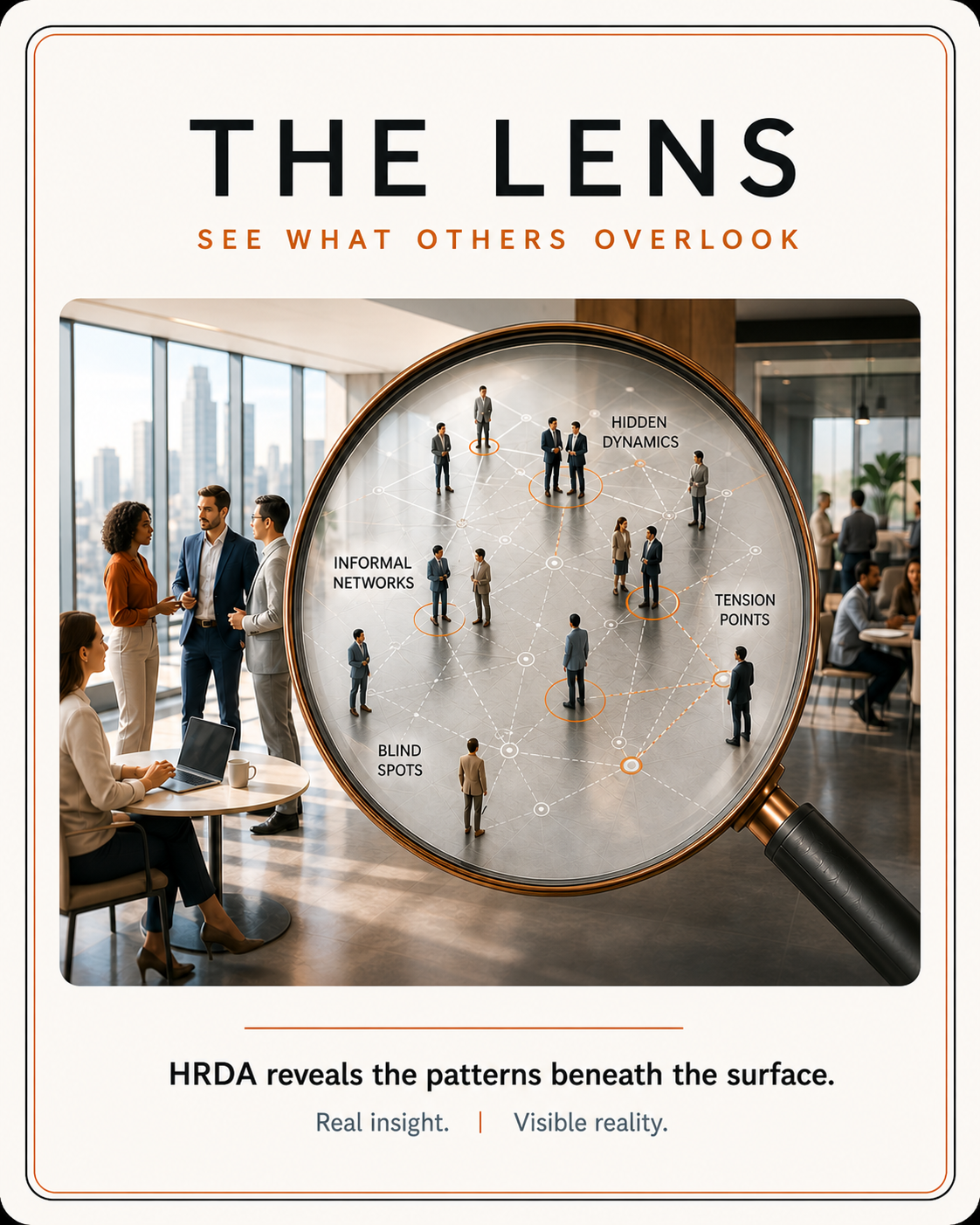
HRDA looks where formal reporting often becomes too clean.
In many organisations, formal reporting creates clarity — but also distance. It can describe structure, compliance, roles and progress while missing how people actually experience decisions, pressure, trust and risk.
HRDA focuses on the interpretive layer: the hidden dynamics, informal signals and behavioural realities that shape whether an organisation can execute, adapt and speak honestly about itself.
- informal power and influence
- trust and withdrawal patterns
- leadership signals and interpretation
- governance gaps and workarounds
- human risk and weak signals
- the gap between intention and lived reality
HRDA is not a culture campaign. It is organisational reality intelligence.
The aim is not to make organisations feel better about themselves. The aim is to help them see more clearly where lived reality is shaping trust, execution and risk.
Interpretive
HRDA does not assume that more data automatically creates better understanding. Signals need context, meaning and judgement.
Human-risk aware
It treats human dynamics as real organisational forces that can affect resilience, security, compliance and performance.
Executive-relevant
HRDA is designed to support decision-makers who need to understand what is shaping behaviour before acting.
Developed from experience in complex, security-conscious and governance-heavy environments.
HRDA draws from practical exposure to organisations where leadership, governance, trust, risk and informal dynamics directly affect outcomes.
These are environments where formal structures matter — but where the decisive signals often appear in behaviour, silence, workarounds and patterns of interpretation.
Governance
Understanding the difference between documented control and lived behaviour.
Security and risk
Recognising that human dynamics often shape whether formal controls actually work.
Organisational reality
Seeing the signals that emerge before the organisation has a formal name for them.
HRDA is designed to be clear, serious and responsible.
Because HRDA deals with sensitive organisational dynamics, it must avoid simplistic blame, surveillance logic or theatrical culture language.
The approach is built around disciplined interpretation and careful framing.
- look for patterns, not scapegoats
- treat silence as information, not absence
- separate symptoms from dynamics
- make reality discussable before prescribing action
- respect organisational sensitivity
- turn insight into responsible orientation
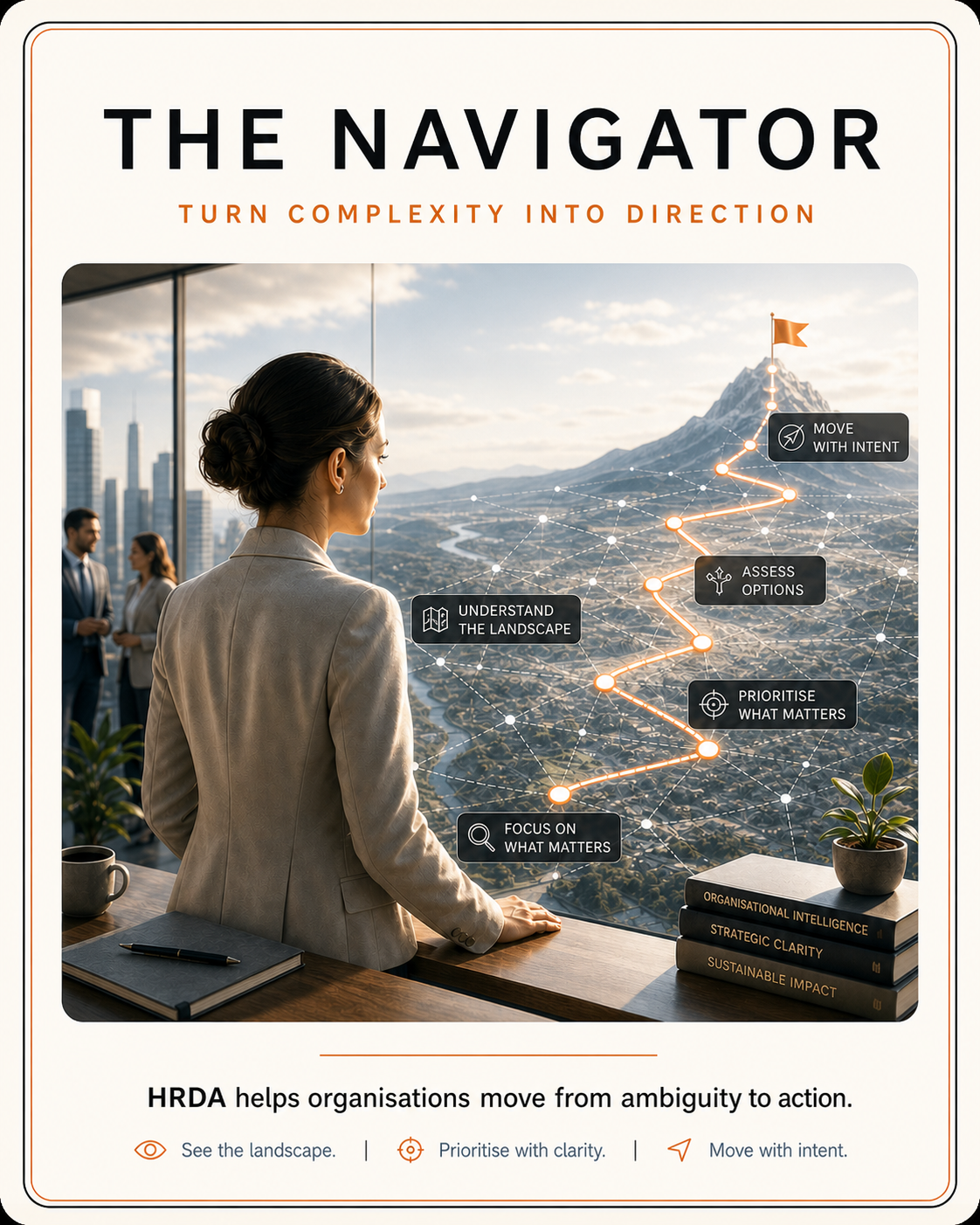
Organisations do not only need more data. They need better visibility into reality.
HRDA is built on a simple conviction: leaders cannot act well on dynamics they cannot see, name or discuss.
The purpose of HRDA is to make the human and organisational layer more intelligible — before hidden dynamics become performance issues, cultural failure, risk exposure or strategic drift.
See earlier
Recognise weak signals before they harden into visible consequences.
Name clearly
Give language to dynamics that are often sensed but not formally expressed.
Act responsibly
Move from reflection to orientation without oversimplifying complex organisational life.
HRDA is becoming a broader Organisational Reality Intelligence capability.
HRDA began from practical exposure to complex organisational environments. Project HRDA turns that perspective into a broader development path for AI-supported situation pictures of how organisations are actually lived.
The Reality Scan is the first practical entry point. Project HRDA invites selected pilot partners, domain experts, builders and investors to help test, challenge and shape the emerging capability.
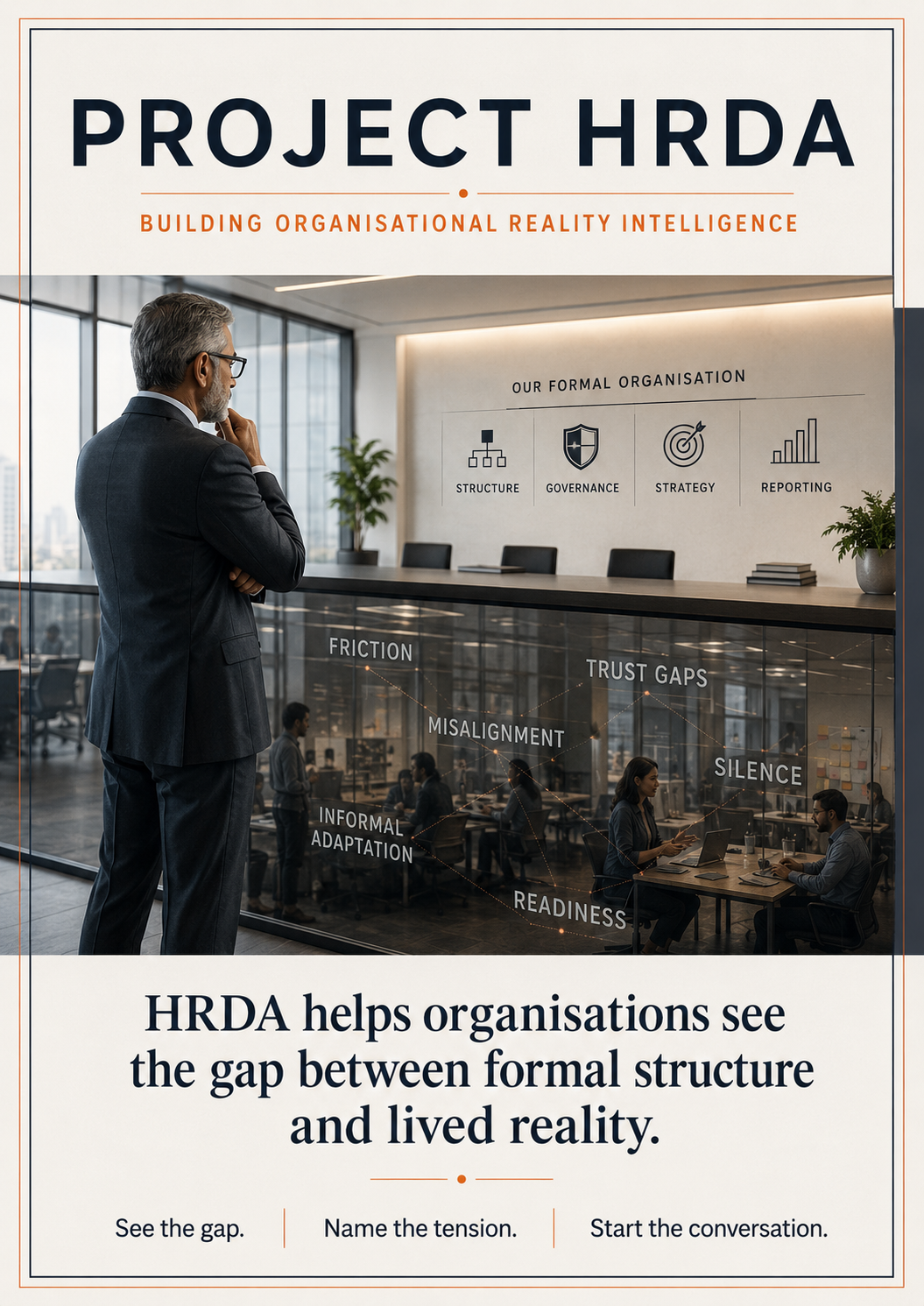
If the formal picture is no longer enough, HRDA can help reveal what is shaping the organisation beneath it.
Explore the method, review use cases, join the broader Project HRDA conversation or start with a focused Reality Scan.