A focused way to understand what is really shaping your organisation.
The HRDA Reality Scan helps leaders identify hidden dynamics, reality gaps and human risk patterns before symptoms become failures.
It is designed for organisations that sense friction, silence, withdrawal, trust erosion or leadership disconnects — but cannot fully explain them through existing metrics, reporting or governance structures.
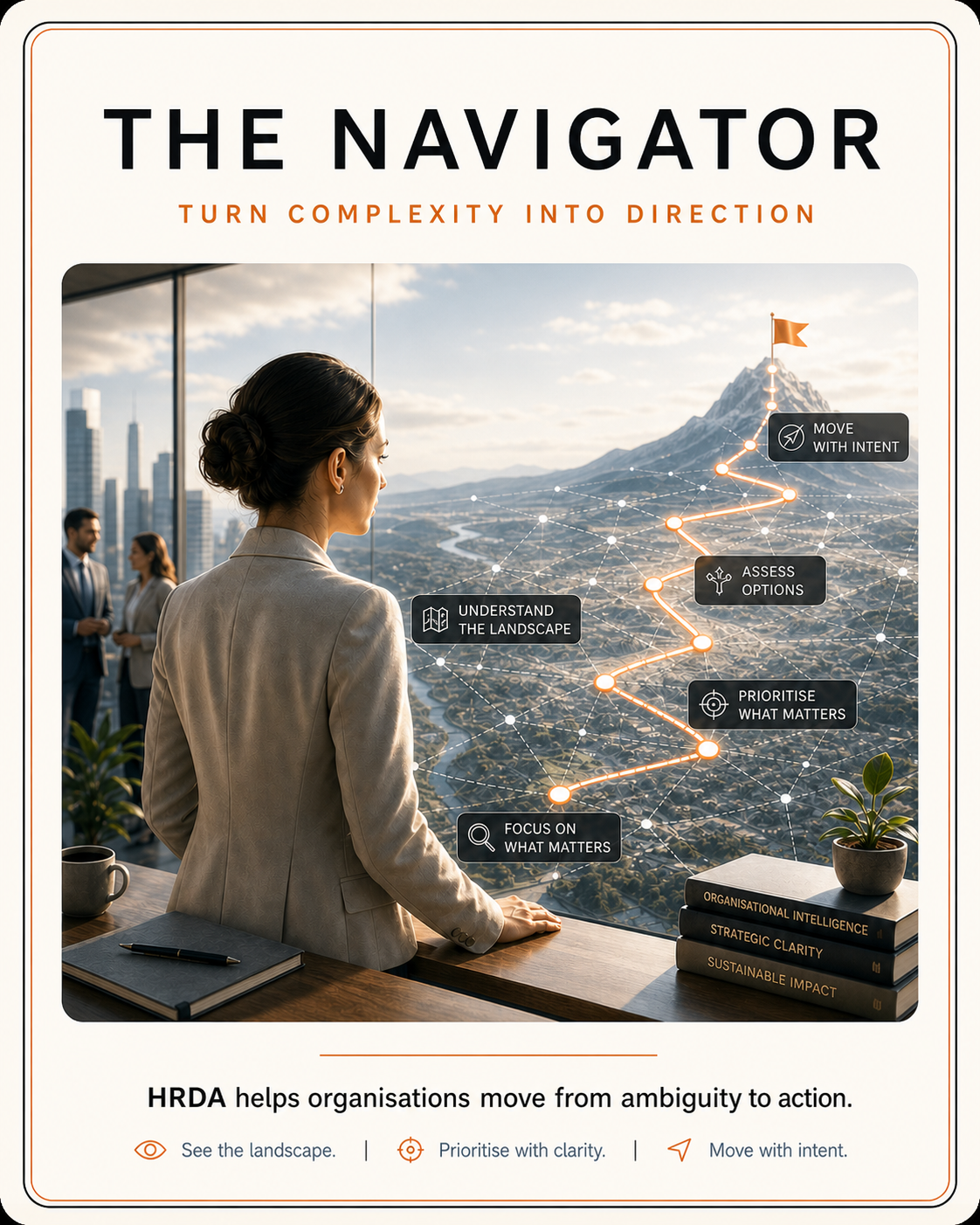
Use a Reality Scan when something important is happening beneath the surface.
Many organisational problems are visible only as symptoms at first: lower trust, unclear accountability, recurring friction, poor collaboration, resistance to change or people who stop speaking up.
The Reality Scan is useful when the formal picture no longer explains the lived reality.
Leadership disconnect
Messages are formally clear, but people interpret them differently or do not act on them.
Silent withdrawal
People still comply outwardly, but energy, trust and willingness to contribute are declining.
Change friction
Transformation is blocked by informal dynamics, unclear incentives or unspoken resistance.
Governance gaps
Rules and processes exist, but the lived behaviour follows another logic.
Trust erosion
People avoid difficult conversations, protect themselves or disengage from formal collaboration.
Human risk
Human and organisational dynamics create risk before incidents become formally visible.
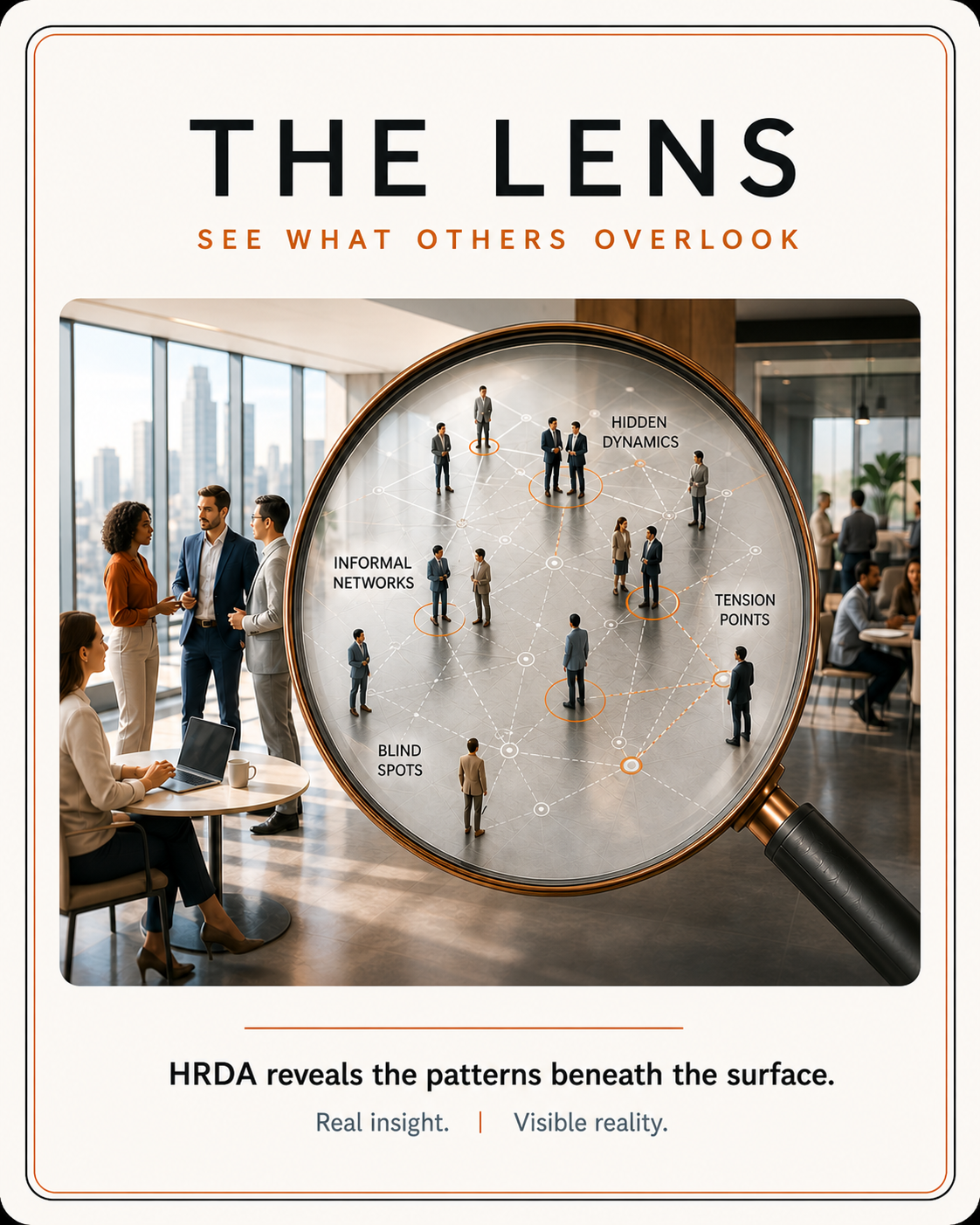
The Reality Scan helps separate symptoms from dynamics.
A Reality Scan does not simply ask whether people are satisfied or dissatisfied. It looks for the underlying patterns that shape behaviour, cooperation, silence, tension and risk.
The aim is to make the situation clearer without oversimplifying it.
- what is repeatedly creating friction
- where trust is weakening
- where people avoid speaking up
- where informal influence shapes decisions
- where formal processes are being worked around
- where leadership messages are not landing
- where human risk is emerging
- which questions require deeper exploration
A Reality Scan is deliberately focused, discreet and practical.
The scan is not designed as a large transformation programme. It is an entry format to understand whether and where lived organisational dynamics need closer attention.
1. Context framing
We clarify the organisational situation, the perceived symptoms and the questions that matter most.
2. Signal collection
Relevant observations, narratives, documents, interviews or existing signals are examined in context.
3. Pattern interpretation
Signals are interpreted for recurring dynamics, reality gaps, tension points and human risk patterns.
4. Reality mapping
The scan structures what appears to be happening beneath the formal surface.
5. Executive sensemaking
The findings are translated into clear organisational insight, without reducing complexity to simplistic labels.
6. Orientation
The scan identifies what should be discussed, prioritised, monitored or explored further.
A structured view of the lived dynamics shaping the situation.
The output is designed for decision-makers. It does not deliver generic culture commentary, but a structured interpretation of what appears to be shaping the organisation beneath the visible surface.
Depending on context and scope, the Reality Scan can be delivered as an executive briefing, short report, visual map or facilitated discussion.
Key dynamics
Which patterns seem to matter most?
Reality gaps
Where does formal intent differ from lived experience?
Next questions
What should leadership explore, discuss or decide next?
The Reality Scan is not a generic engagement survey or diagnostic dashboard.
It does not aim to rate people, assign blame or reduce organisational life to a few numeric indicators. It is also not a substitute for legal, clinical or formal investigation processes where those are required.
Its purpose is to make lived organisational reality more visible and interpretable — so that leaders can act with better judgement.
Not surveillance
The focus is on organisational patterns, not individual monitoring.
Not blame
The scan examines dynamics and conditions, not personal fault.
Not theatre
The goal is not symbolic culture work, but usable organisational insight.
A first conversation is exploratory.
The first step is not a sales process with a fixed package. It is a focused conversation about the situation, the signals you are seeing and whether HRDA is an appropriate lens for the context.
A useful starting point is often one of these questions:
- What is happening that formal reporting does not explain?
- Where do people sense friction but avoid naming it?
- Which organisational patterns keep repeating?
- What risks are emerging beneath the surface?
- Which conversations are not happening?
- Where would better visibility change judgement?
The Reality Scan is the first practical entry point.
The HRDA Reality Scan applies Organisational Reality Intelligence to one clearly defined organisational situation.
It keeps HRDA grounded in real organisational use cases while Project HRDA develops the broader capability: selected pilot partners, domain experts, AI builders, investors and strategic partners can help test, challenge and shape the emerging approach.
For organisations, the Reality Scan is the concrete starting point. For partners, experts and builders, Project HRDA opens the wider development conversation.
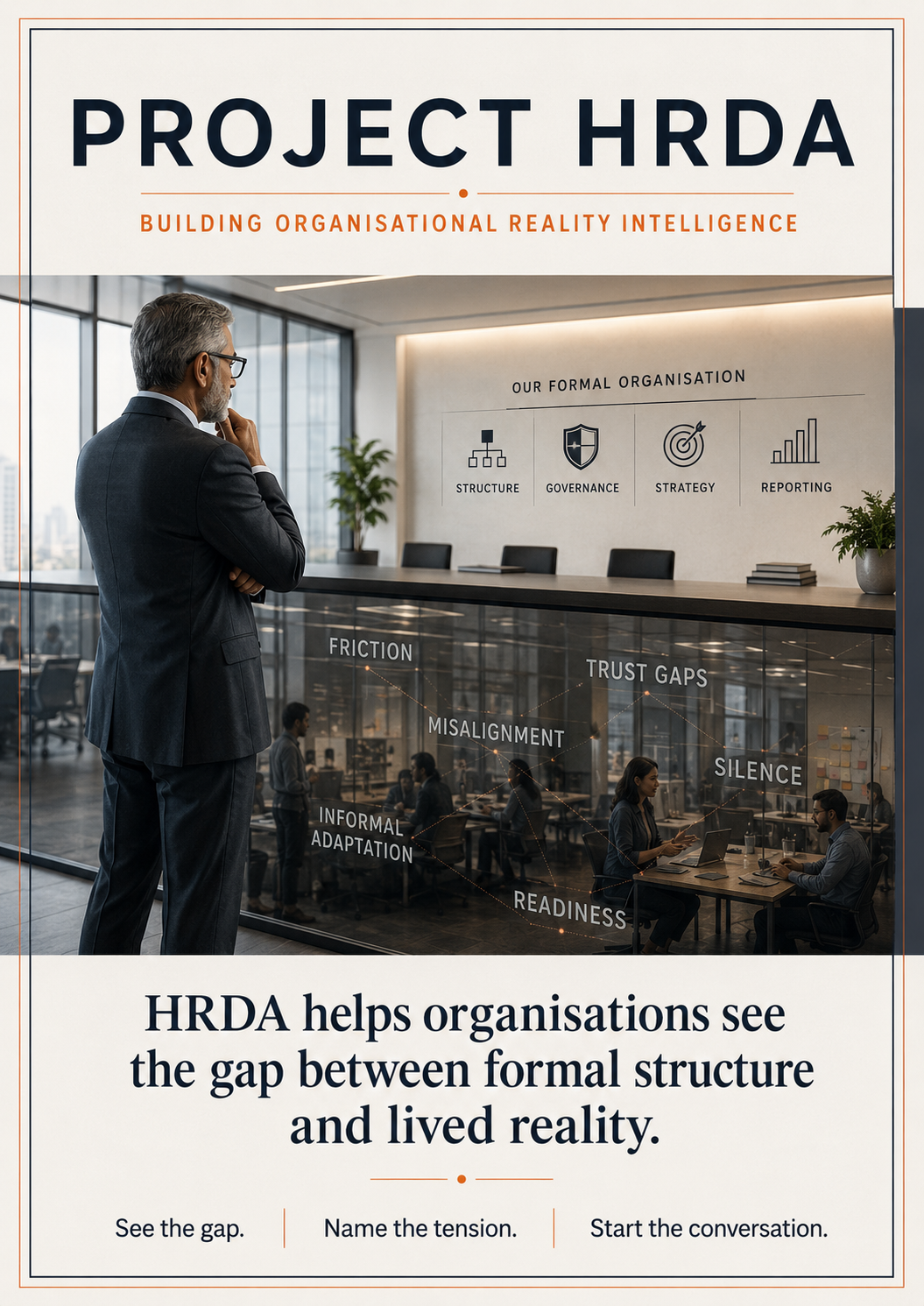
Reality Scan examples will be explored separately.
Use cases deserve enough space to show concrete organisational situations, possible HRDA angles and sample outputs. For now, this page focuses on what the Reality Scan is and how it creates value.
Leadership disconnect
When leadership believes the message is clear, but lived behaviour suggests otherwise.
Transformation friction
When change is formally accepted but informally resisted or worked around.
Human risk
When people, pressure, silence or informal behaviour create organisational risk.
What is your organisation trying to tell you beneath the surface?
If formal structures no longer explain what is happening, a Reality Scan can help make the underlying dynamics visible.