Start with the reality you are seeing.
If formal structures no longer explain what is happening, HRDA can help make the underlying dynamics visible.
Use this page to start a conversation about a Reality Scan, a potential pilot, Project HRDA, a strategic partnership or a specific organisational situation where the lived reality matters.
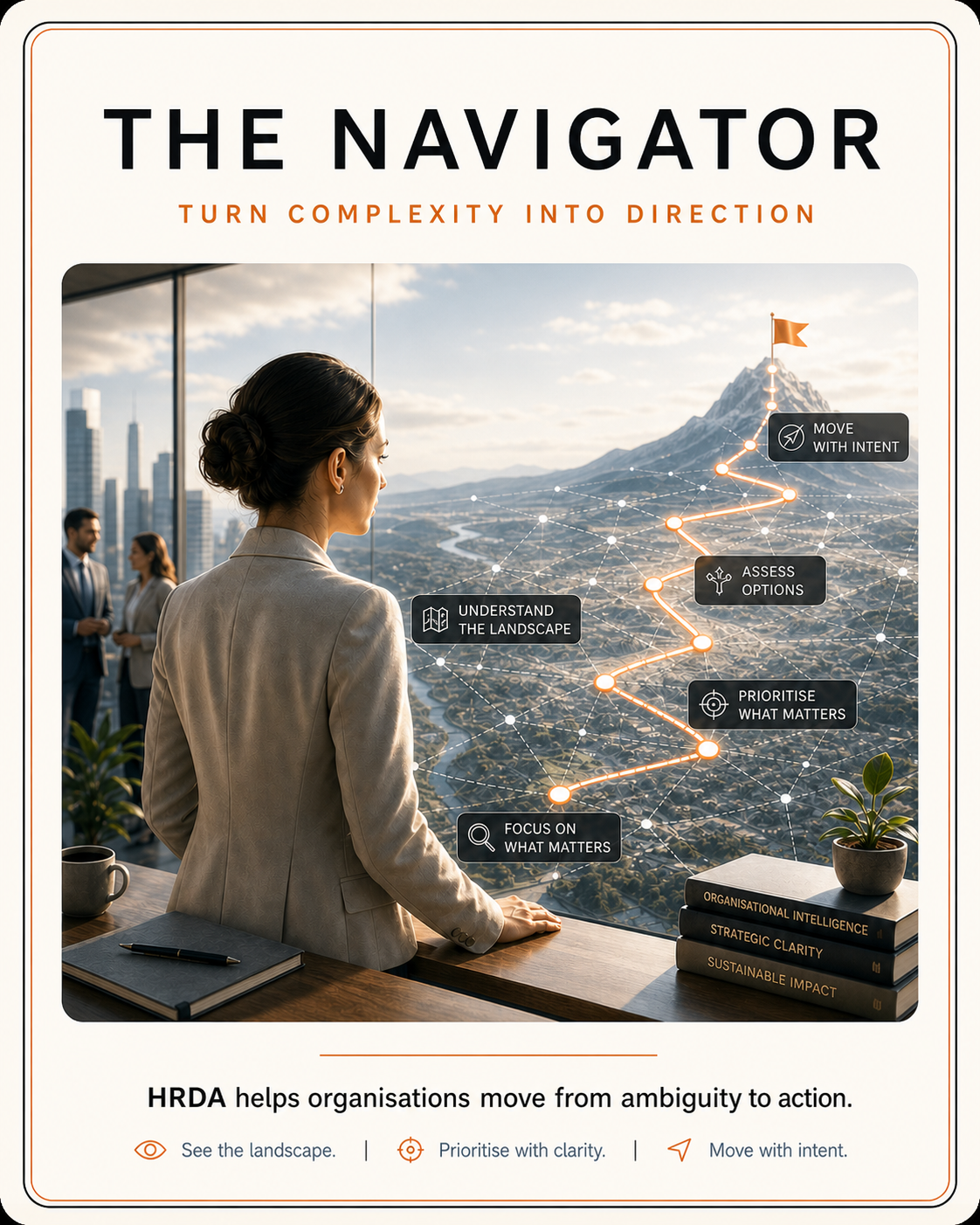
Contact HRDA when the symptoms are visible but the dynamics are not.
A first conversation is useful when you sense that something important is shaping trust, cooperation, risk or execution — but existing reporting, metrics or formal governance do not fully explain it.
Reality Scan
You want to understand whether HRDA can clarify a specific organisational situation.
Pilot conversation
You are exploring whether HRDA could be tested in a focused, discreet and practical format.
Project HRDA
You want to discuss how to test, challenge, build, invest in or contribute to Organisational Reality Intelligence.
Strategic partnership
You see a potential fit with organisational intelligence, human risk, governance or leadership work.
Use case exploration
You recognise one of the HRDA use cases and want to discuss whether it applies to your context.
Confidential situation
You need to discuss a sensitive organisational pattern before deciding what to do next.
You do not need a finished diagnosis.
It is enough to describe the situation, the signals you are seeing and why the existing explanation feels incomplete.
A useful first message can be short and direct.
- What is happening that formal reporting does not explain?
- Where do you see friction, silence, avoidance or withdrawal?
- Which leadership, governance or risk question is becoming harder to answer?
- What would better visibility help you decide?
- Is this about a team, function, transformation, leadership layer or broader organisation?
- Is the context exploratory, urgent, sensitive, strategic or venture-related?
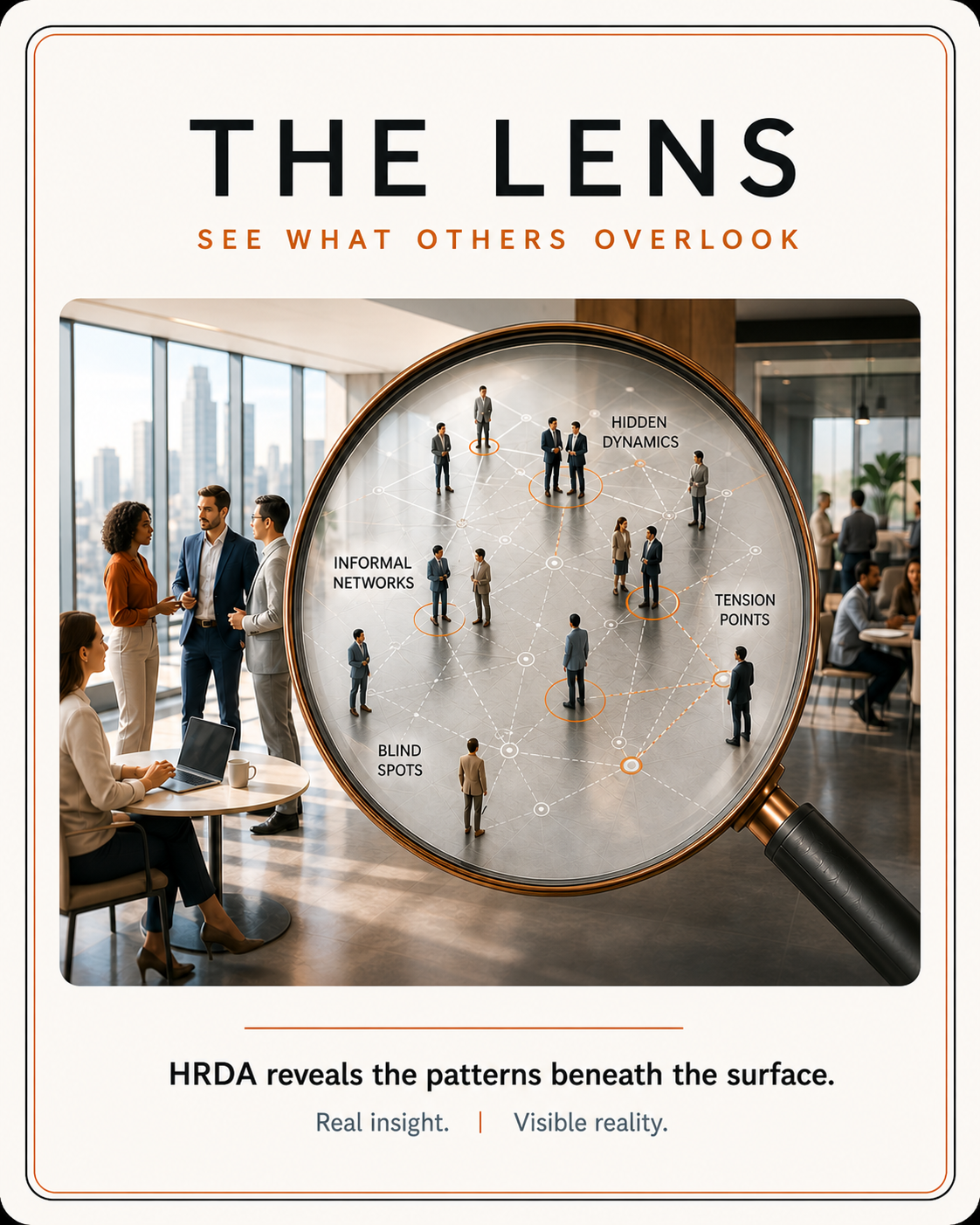
Start the conversation by email.
For now, the simplest way to contact HRDA is by email. Briefly describe the organisational situation, the signals you are seeing and whether you are interested in a Reality Scan, pilot discussion, Project HRDA or partnership conversation.
If the context is sensitive, keep the first message high-level. Details can be discussed later in an appropriate setting.
Subject suggestion
HRDA conversation
Useful context
Briefly describe the organisation, the issue and what feels insufficiently visible.
Next step
If there is a fit, the next step is an exploratory conversation.

The first conversation is exploratory, not performative.
The goal is to understand whether HRDA is a useful lens for the situation. Sometimes the answer will be a focused Reality Scan. Sometimes the useful next step is a narrower conversation, a workshop, a partnership discussion or simply a better framing of the issue.
HRDA is most useful where leaders are willing to look at lived reality without reducing it to blame, theatre or superficial metrics.
Not every conversation has to start as a client enquiry.
Project HRDA is open to selected conversations with people and organisations that can help test, challenge, apply or build the approach.
This includes pilot organisations, domain experts, AI builders, operator-angels, investors and strategic partners interested in vertical AI, human risk, governance, people analytics or organisational intelligence.
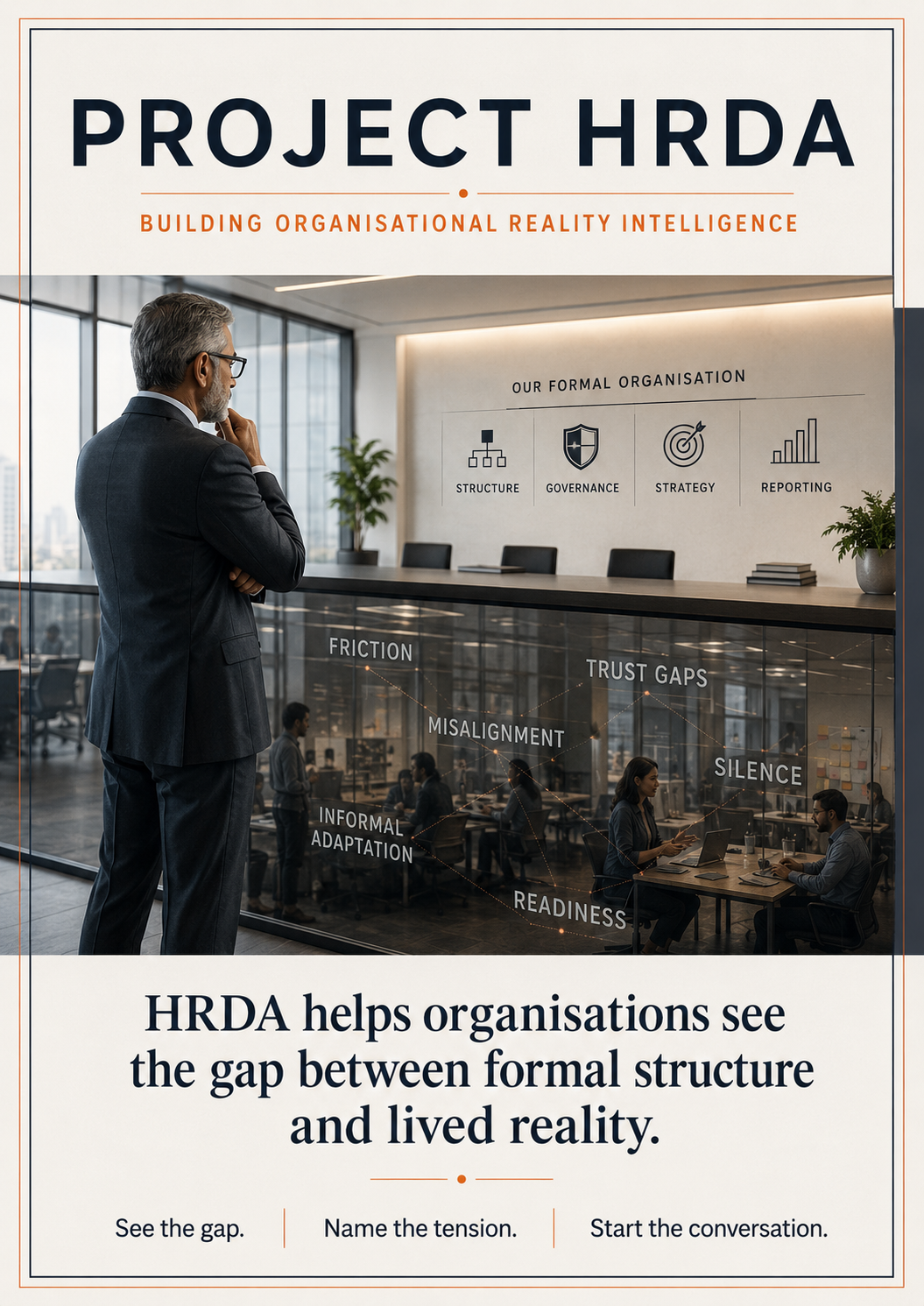
Start with one sentence that describes the tension.
A good first contact does not need to be polished. It should simply point to the organisational reality you want to understand better.
“The message is clear, but behaviour is not changing.”
This may indicate a leadership disconnect, informal resistance or a credibility gap.
“People have stopped speaking openly.”
This may indicate withdrawal, fear of consequences, mistrust or learned silence.
“The policy exists, but people work around it.”
This may indicate a governance gap between formal control and lived behaviour.
“The transformation is moving on paper, but not in reality.”
This may indicate friction in incentives, power structures, trust or organisational fatigue.
“The risk is not visible yet, but the signals are there.”
This may indicate emerging human risk before formal incidents occur.
“The official story no longer explains what we experience.”
This may be exactly where HRDA can help make organisational reality visible.
What is your organisation trying to tell you beneath the surface?
Start with a short message. The first step is simply to clarify whether HRDA is the right lens for the situation.