Understanding the organisation as it is actually lived.
HRDA — Human Reality Dynamics Assessment — is an interpretive framework for making the lived dynamics behind formal structures visible, discussable and actionable.
It helps organisations understand what is shaping trust, cooperation, silence, friction, informal power, withdrawal and human risk beneath the surface of charts, policies and official narratives.
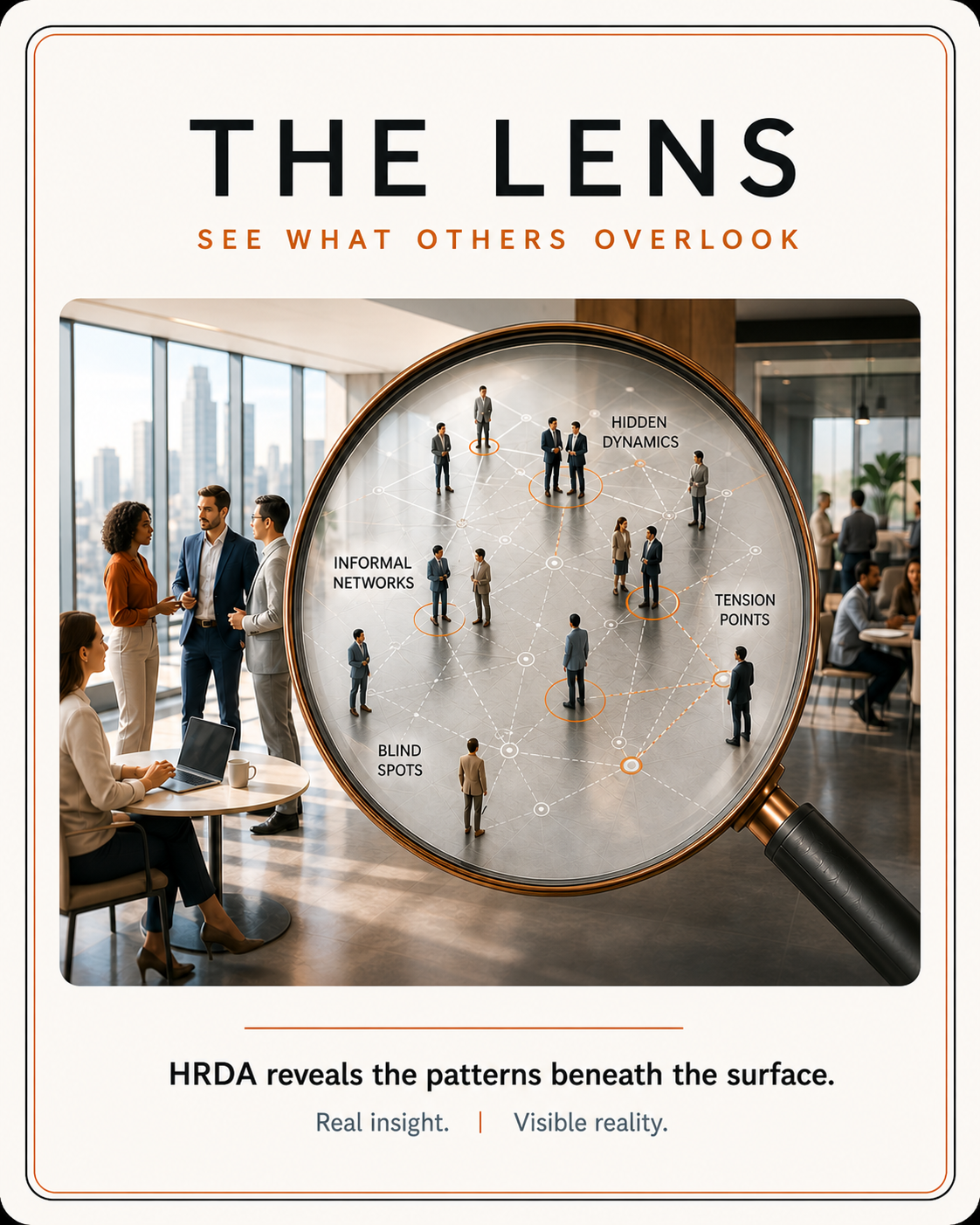
Organisations are not only formal systems. They are lived realities.
Most organisations describe themselves through structures, roles, processes, governance models and values. These are important — but they do not fully explain how work is actually experienced or how decisions are truly shaped.
HRDA focuses on the human and organisational dynamics that often remain informal: patterns of trust, hesitation, avoidance, influence, silence, loyalty, overload, resistance and adaptation.
Formal structure
The official organisation: charts, policies, roles, reporting lines, governance and documented processes.
Lived reality
The experienced organisation: how people actually cooperate, avoid, decide, withdraw, speak up or work around obstacles.
Human dynamics
The patterns that connect behaviour, perception, trust, pressure, informal influence and organisational risk.
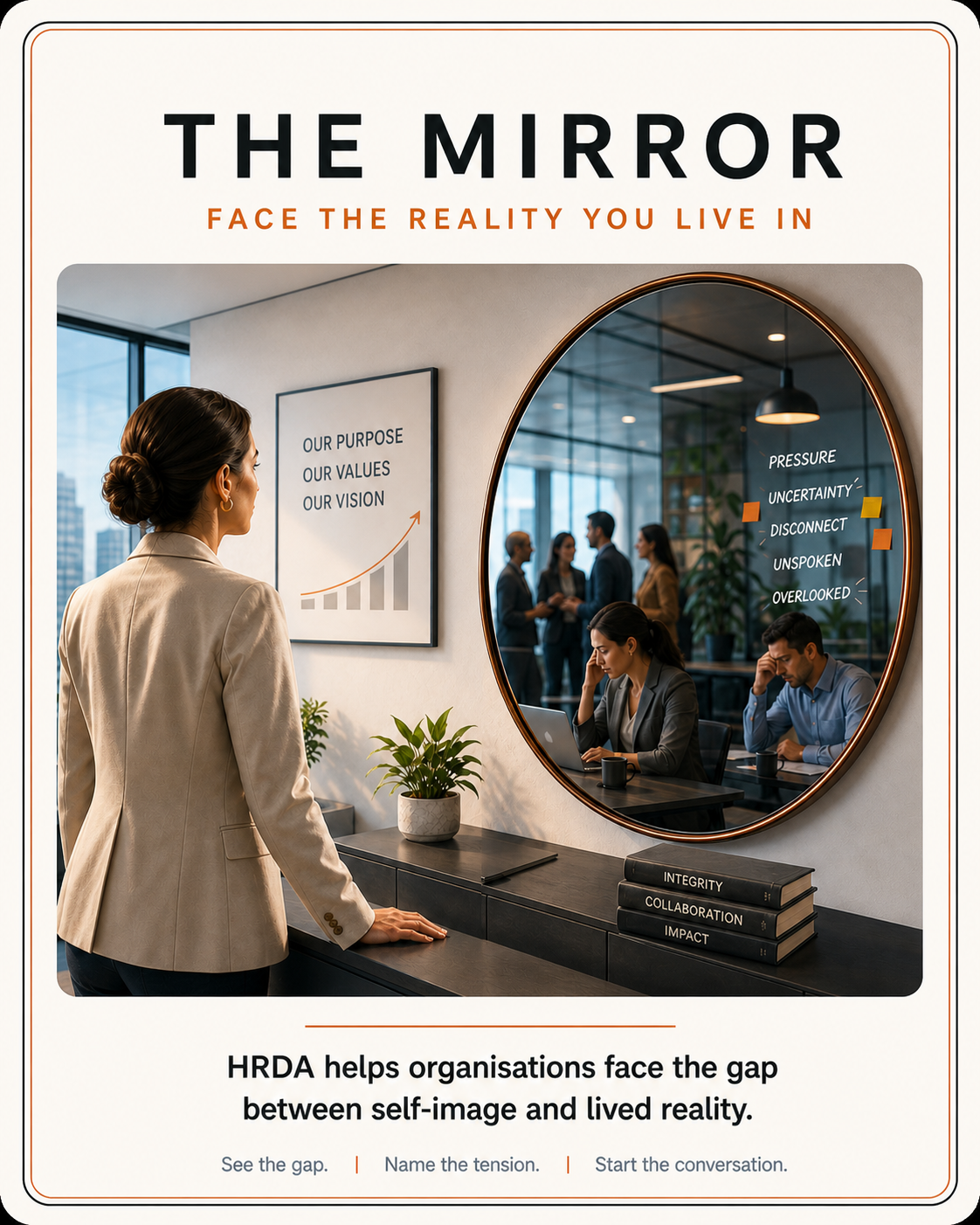
The organisation people describe is often not the organisation people experience.
Every organisation has an official self-image: its values, leadership principles, transformation goals, governance structures and internal narratives.
But people also experience another layer: how safe it feels to speak up, which conflicts are avoided, which rules are worked around, where influence really sits, what is tolerated and what is never discussed.
HRDA helps make the gap between formal intention and lived reality visible — without reducing people to metrics or turning organisational life into a simplistic dashboard.
HRDA reveals patterns that are often felt before they are formally recognised.
Many organisational problems do not begin as visible failures. They begin as repeated micro-patterns: tolerated friction, quiet withdrawal, unclear accountability, informal workarounds or conversations that never happen.
- where trust is weakening
- where people withdraw instead of speaking up
- where formal authority differs from real influence
- where friction is repeatedly tolerated
- where leadership messages are not landing
- where governance exists formally but not behaviourally
- where informal workarounds become operational risk
- where silence becomes a management blind spot
- where people comply outwardly but disengage internally
- where human risk is emerging before it becomes measurable
HRDA is not another engagement survey, culture slogan or generic dashboard.
HRDA is designed to avoid common misreadings. It is not about blaming individuals, policing behaviour or producing decorative culture metrics. Its purpose is to make organisational reality more intelligible so that leaders can act with greater clarity and responsibility.
Not surveillance
HRDA does not exist to monitor people. It looks for organisational patterns, not personal fault.
Not soft HR theatre
HRDA addresses human dynamics as real organisational forces that affect risk, performance and leadership effectiveness.
Not pure analytics
HRDA does not assume that more data automatically creates better understanding. Interpretation matters.
Invisible dynamics become visible consequences.
When lived organisational reality remains unexamined, leaders often react too late. They see symptoms — disengagement, resistance, risk events, failed change, weak collaboration, talent loss or governance gaps — but not the dynamics that produced them.
HRDA helps identify these dynamics earlier, while they are still discussable and before they harden into culture, risk or operational failure.
Better judgement
Leaders understand not only what is happening, but why it keeps happening.
Earlier signals
Weak signals become visible before they turn into formal incidents or failures.
Responsible action
Organisations can address reality without oversimplifying or personalising systemic patterns.
HRDA is being developed as Organisational Reality Intelligence.
HRDA is more than a diagnostic vocabulary. It is being developed into a practical capability for turning fragmented organisational signals into leadership-ready situation pictures.
The HRDA Reality Scan is the first concrete entry point. Project HRDA opens a broader conversation with selected pilot partners, domain experts, builders and investors interested in developing this capability further.
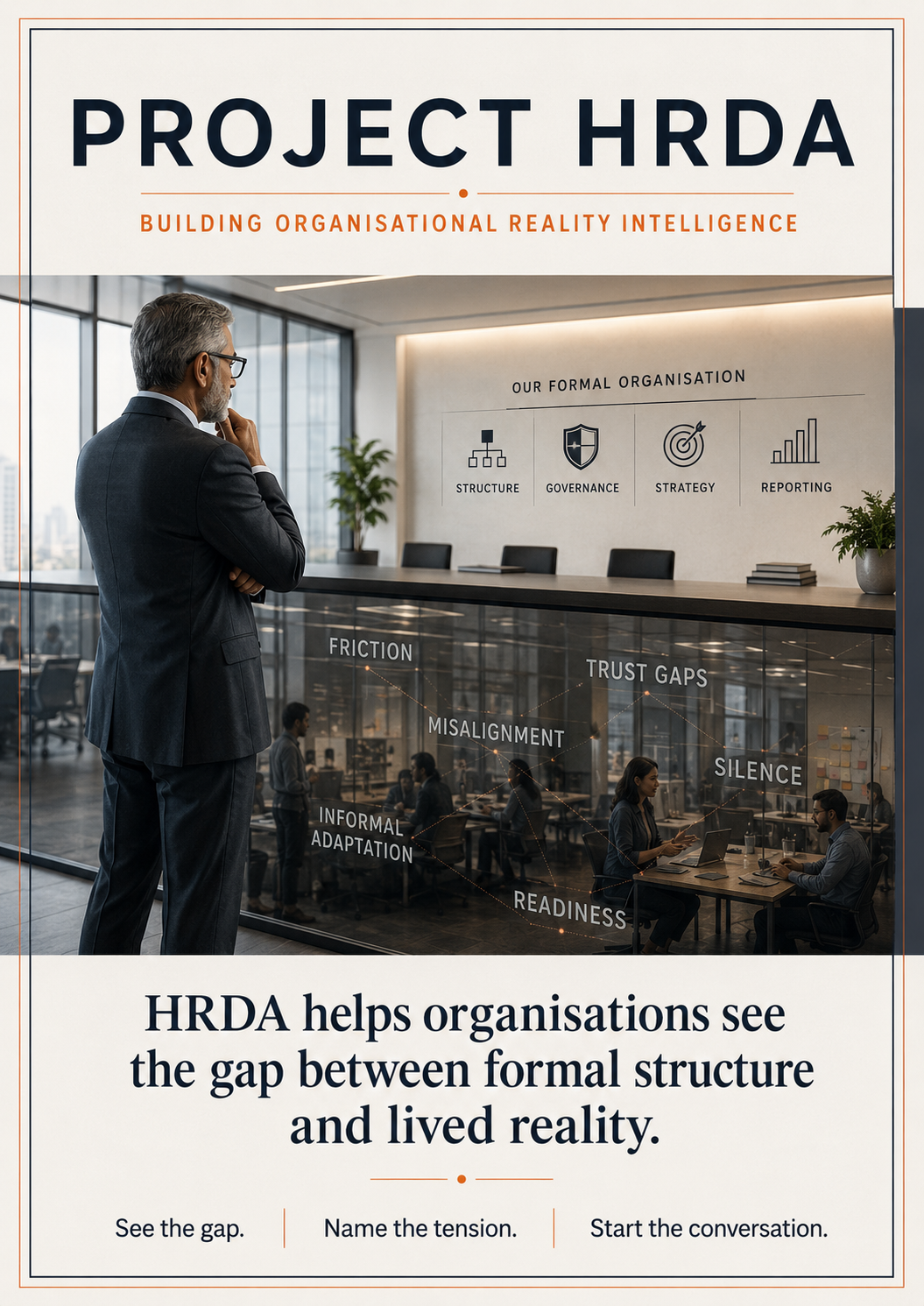
HRDA turns lived reality into organisational insight.
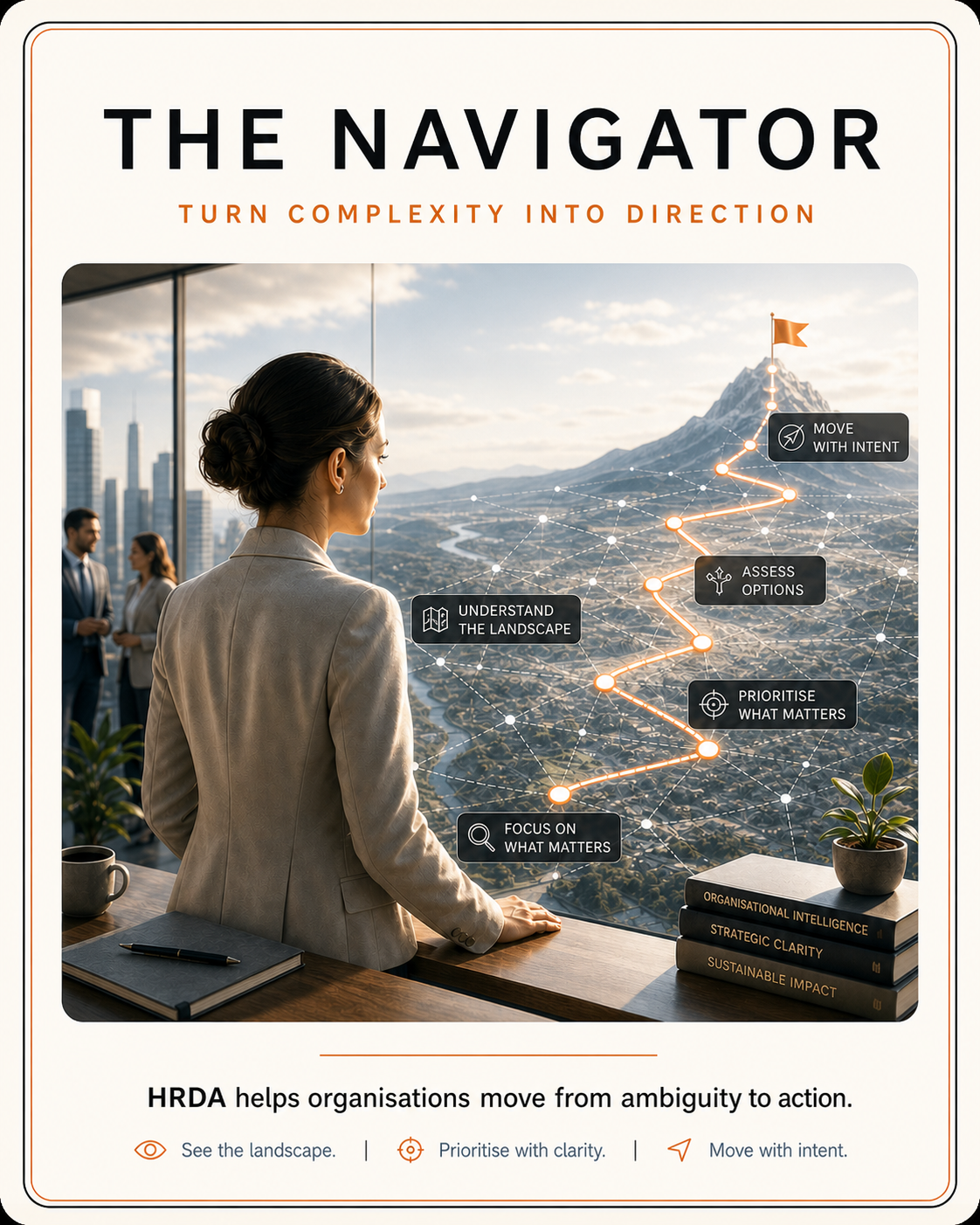
Visibility alone is not enough. HRDA connects diagnosis with orientation: what is happening, what it means, where it matters most and what should be explored next.
This is where HRDA moves from reflection to practical organisational intelligence.
Ready to understand what is really shaping your organisation?
Start with the HRDA model, explore the Reality Scan as a practical entry point, or learn how Project HRDA is developing Organisational Reality Intelligence for the AI era.