Insights on lived organisational reality.
HRDA Insights explores the dynamics that formal structures often miss: silence, withdrawal, informal power, leadership blind spots, trust erosion and human risk.
These are not abstract culture topics. They are signals that shape execution, cooperation, governance and risk before they become visible failures.
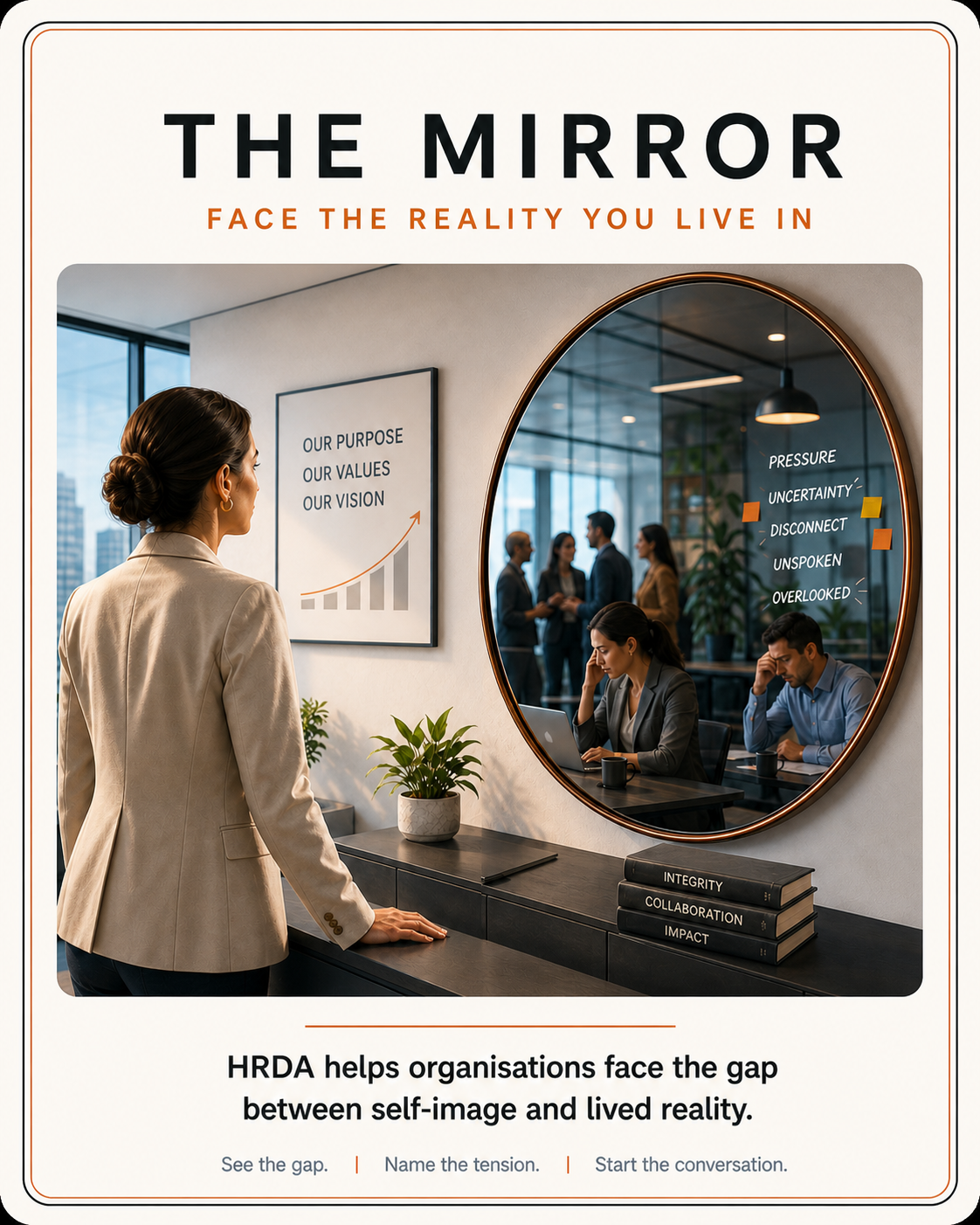
HRDA writes about the gap between the organisation on paper and the organisation people actually live in.
The Insights section is designed as a growing editorial layer for HRDA: short, sharp and useful reflections on organisational reality, human risk and the patterns that leaders often sense before they can name them.
Hidden dynamics
What shapes behaviour beneath formal roles, structures and reporting lines?
Reality gaps
Where does the official story differ from lived organisational experience?
Human risk
Where do pressure, silence, avoidance or informal behaviour create risk before incidents appear?
Two starting points for understanding lived organisational reality.
These first insights define the core HRDA perspective: withdrawal is information, and governance only becomes real when it shapes behaviour.
What withdrawal can reveal about organisational reality
Withdrawal is not simply absence. It can be a signal that people have stopped believing that speaking, contributing or challenging is useful, safe or worth the cost.
Why formal governance rarely captures lived organisational reality
Governance describes how an organisation intends to work. Lived reality reveals whether behaviour, trust and informal practice actually follow that intent.
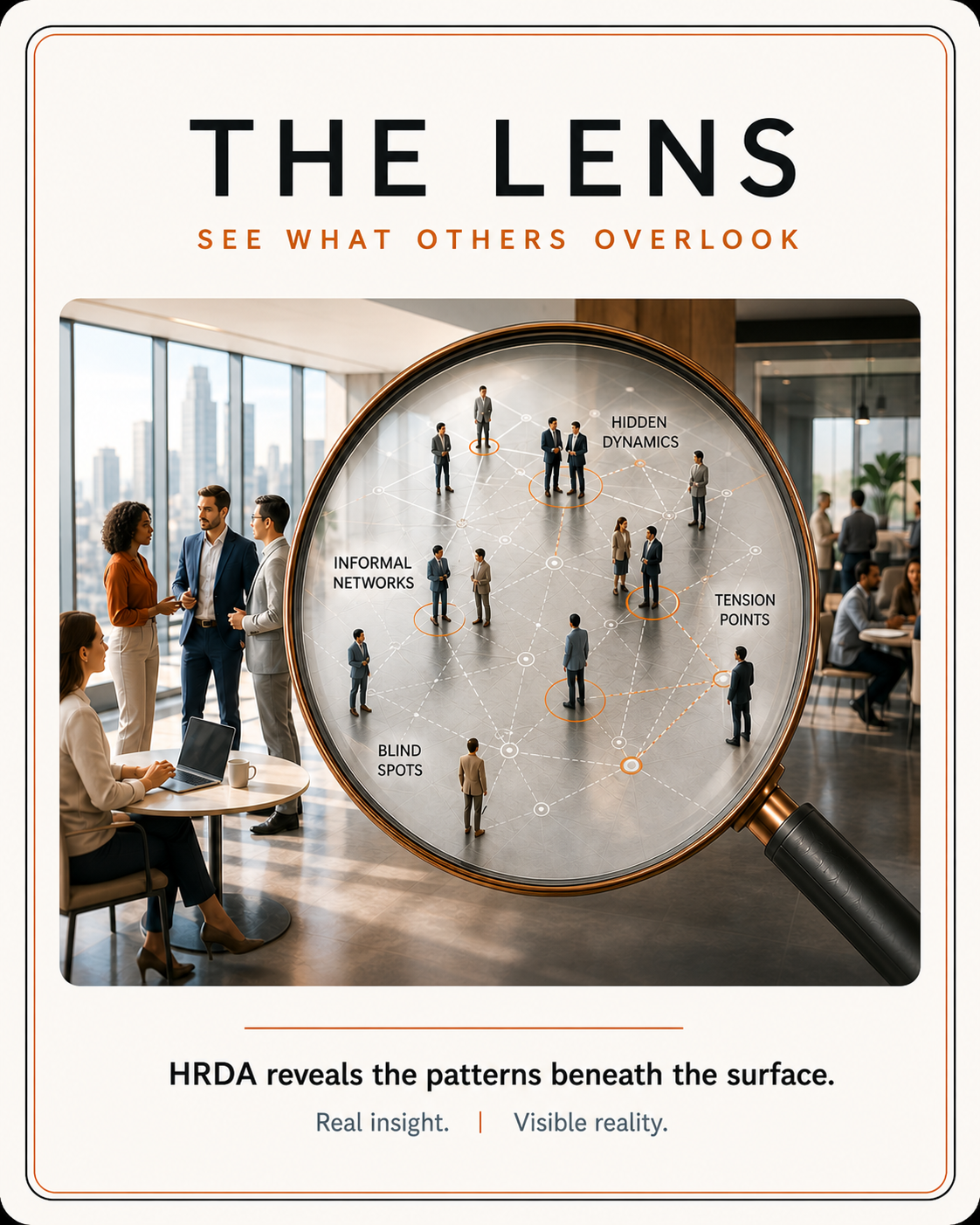
The weak signals are often visible before the failure is.
Organisations rarely fail because no one noticed anything. They fail because the signals were too informal, too uncomfortable or too difficult to interpret within the existing governance language.
HRDA Insights gives these signals a language: withdrawal, silence, informal power, tolerated friction, reality gaps and human risk.
- what people avoid saying
- where trust is quietly weakening
- which workarounds become normal
- where leadership visibility is weakest
- which dynamics keep repeating
- where risk begins before incidents appear
A growing editorial sequence for leaders who want to see earlier.
HRDA Insights will develop a focused body of thought around organisational reality intelligence, human risk and the leadership consequences of unseen dynamics.
The cadence should stay deliberate: fewer pieces, sharper ideas, stronger relevance.
The message is clear. The organisation hears something else.
How leadership intent is reinterpreted by trust, history and informal incentives.
Trust rarely collapses overnight.
It withdraws quietly first — from meetings, feedback, challenge and initiative.
Controls fail where behaviour learns to bypass them.
Why security and compliance depend on lived organisational reality.
HRDA Insights should be precise, not noisy.
The goal is not to publish constantly. The goal is to make organisational reality more intelligible through strong, memorable and useful perspectives.
Sharp
Each insight should name a real organisational pattern clearly enough that leaders recognise it.
Credible
The tone should remain serious, grounded and executive-relevant — never sensational or generic.
Useful
Every piece should help the reader see a situation differently or ask a better question.
When an insight describes your organisation, the next step is visibility.
Insights are useful when they help leaders recognise a pattern. The Reality Scan is the practical entry point for exploring whether that pattern is shaping a specific organisational context.
If the symptoms are visible but the underlying dynamics are unclear, HRDA can help make the situation more discussable and actionable.
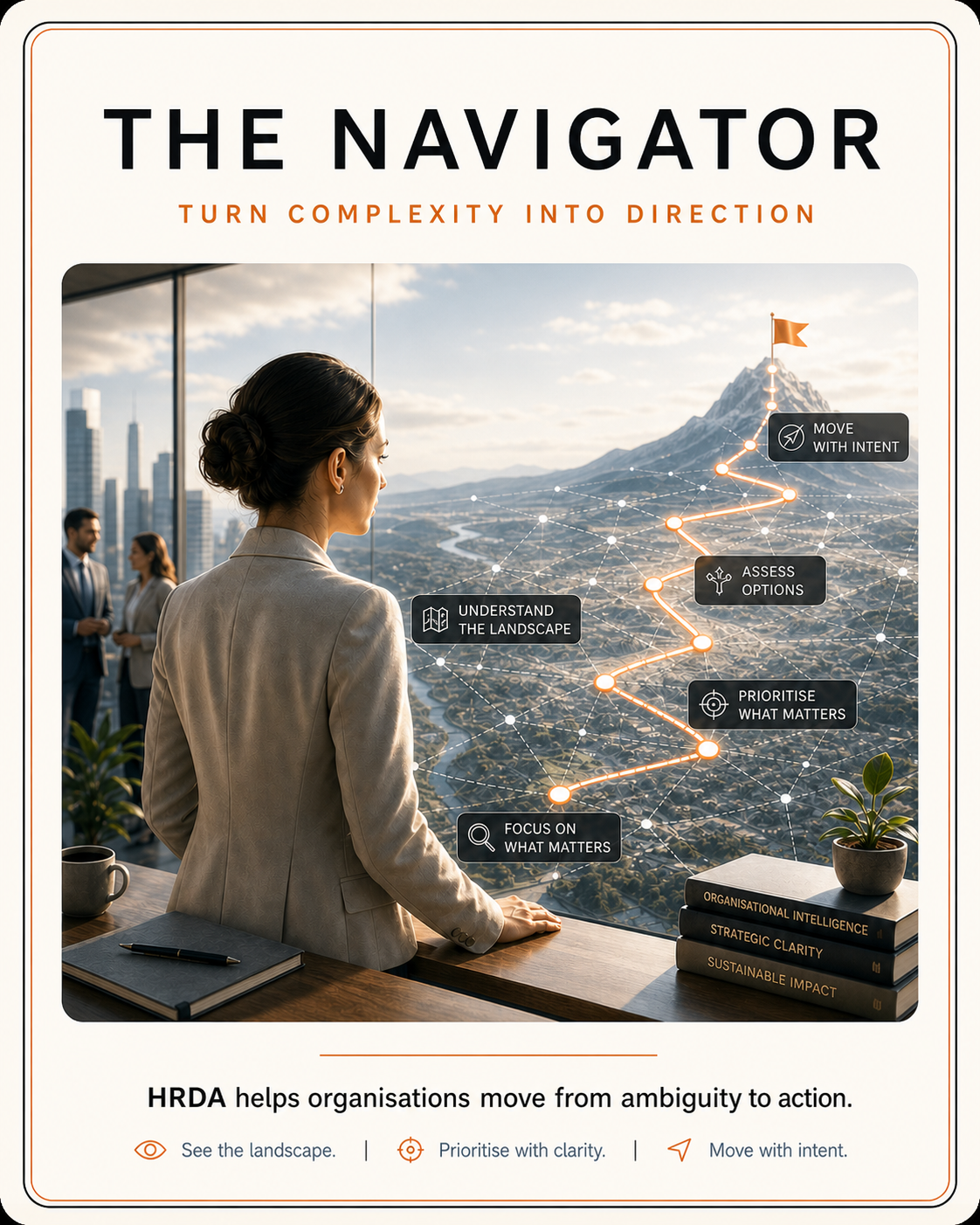
Insights help shape the emerging capability.
Project HRDA is not developed from abstract theory alone. It grows from real organisational patterns: silence, withdrawal, trust gaps, governance gaps, leadership blind spots and human risk.
For readers, Insights provide language for recognising these patterns. For selected partners, experts, builders and investors, Project HRDA opens the broader conversation about how Organisational Reality Intelligence can be tested, challenged and developed.
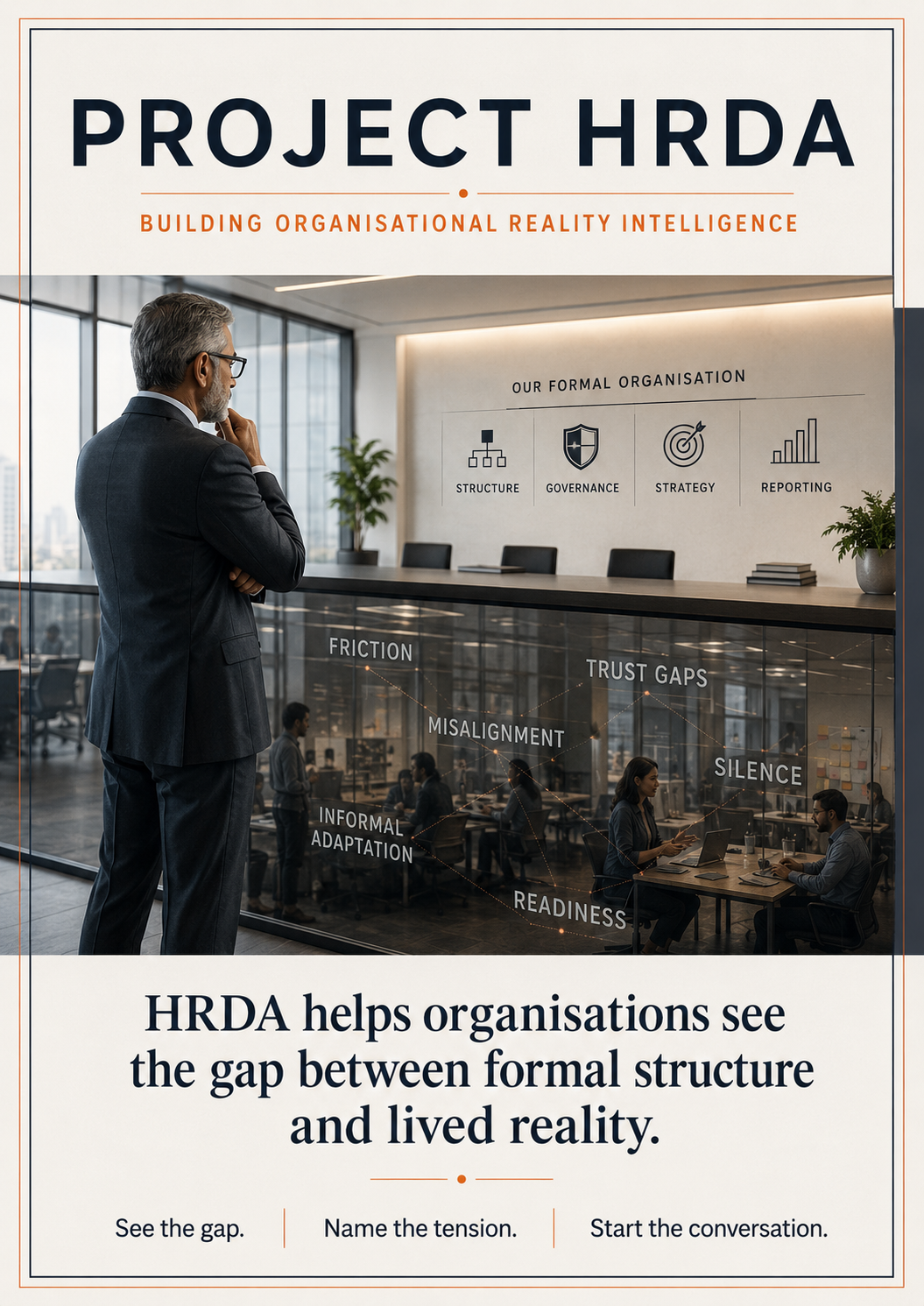
Organisations speak before they fail. The question is whether leaders can read the signals.
HRDA Insights helps build that language — one pattern at a time.